As an Amazon Associate, we earn from qualifying purchases. Some links on this site are affiliate links at no extra cost to you. Our recommendations are based on thorough research and editorial judgment.

3 Best Audio Interfaces With High Pass Filters for Perfect Sound Quality

Looking for exceptional audio interfaces with high pass filters? Check out the PreSonus AudioBox 96 for its two Class-A preamps and included Studio One Artist DAW! Next, the AMIX40U offers ten channels and Bluetooth, perfect for versatile setups! Don’t forget the Solid State Logic SSL 2 Plus MKII, featuring professional-grade converters and dual headphone outputs. These interfaces guarantee clear sound quality and great performance. Stick around to discover more insightful comparisons and tips! 🎤✨
Key Takeaways
- The PreSonus AudioBox 96 offers high-quality mic preamps and includes high pass filter features for clear audio recording.
- AMIX40U provides ten channels with ultra-low-noise preamps and selectable sound modes, enhancing audio quality for various applications.
- Solid State Logic SSL 2 Plus MKII features 32-Bit / 192 kHz AD/DA converters and versatile connectivity, ideal for professional-grade recordings with clarity.
- Look for interfaces with adjustable high pass filters to eliminate unwanted low-frequency noise, crucial for achieving perfect sound quality.
- Consider audio interfaces with features like zero-latency monitoring and multiple preamps to ensure optimal recording experiences.
PreSonus AudioBox 96 USB Audio Interface with Studio One Artist DAW
Sale

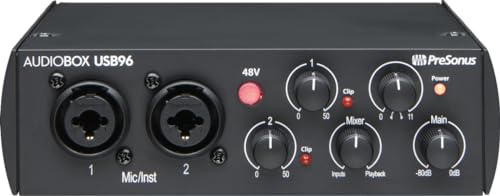
PreSonus AudioBox 96 25th Anniversary USB Audio Interface
- Value-packed 2-channel USB 2.0 interface for personal and portable recording.
- 2 high-quality Class-A mic preamps make it easy to get a great sound.
- 2 high-headroom instrument inputs to record guitar, bass, and your favorite line-level devices, plus MIDI I/O.

You may be interested


If you’re looking for an audio interface that’s as versatile as it is portable, the PreSonus AudioBox 96 USB Audio Interface may just be your new best friend! This compact device packs a punch with two high-quality Class-A mic preamps and supports up to 24-bit/96 kHz recording.
Key Features:
- MIDI I/O for connecting keyboards
- Mix control for zero-latency monitoring
- USB bus-powered for mobility
Built with a heavy-duty steel chassis, it’s as durable as it is sleek. Plus, with over $1,000 worth of software, including Studio One Artist, you’re ready to create! 🎶
Best For: The PreSonus AudioBox 96 is best for beginners and budget-conscious creators looking for a portable and user-friendly audio recording solution.
Pros:
- Easy plug-and-play setup with minimal configuration needed.
- High-quality audio recording capabilities at 24-bit/96 kHz.
- Includes a comprehensive software bundle worth over $1,000.
Cons:
- Limited to two input channels, which may not suffice for larger projects.
- Some users may find the software features basic compared to professional DAWs.
- MIDI I/O is present, but advanced MIDI features may be lacking for power users.
Audio Interface with Pro Preamp and Bluetooth (AMIX40U)
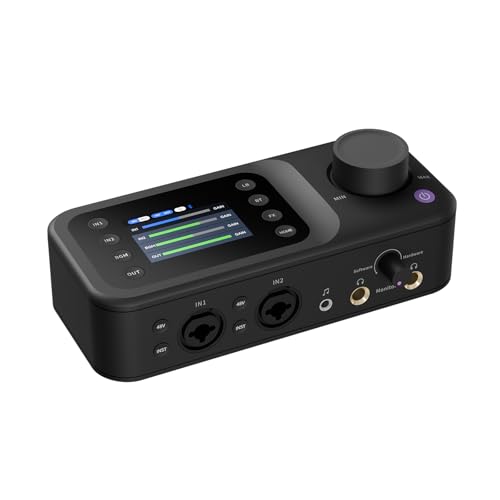
NearStream Audio Interface with Pro Preamp, 10 Channels, 48V Phantom Power, Dual XLR/6.35mm Combo...
- [All-in-One, Easy-to-Use Audio Interface]: This interface for recording music is a complete production studio that features everything you need to stream, podcast, make...
- [Two High-Quality XLR/6.35mm Combo Jacks with Premium Preamps]: This audio interface features two XLR/6.35mm combo inputs, designed to connect microphones and instruments...
- [HD LCD Screen for Real-Time Status Display & Intuitive Control]: The audio interface for PC features a 2-inch HD LCD screen, making it incredibly easy to navigate. With...
When you’re serious about audio quality, the AMIX40U audio interface with its pro preamp and Bluetooth connectivity stands out as a top contender! This compact device offers ten channels, dual XLR/6.35mm combo jacks, and 48V phantom power—perfect for guitars, podcasts, and music production.
Key Features:
- Inputs: Two XLR/6.35mm combo inputs plus Bluetooth and AUX.
- Outputs: Dual headphone outputs for real-time monitoring, two stereo audio outputs, and OTG port.
- Audio Control: Ultra-low-noise preamps and three selectable sound modes.
The AMIX40U is portable, user-friendly, and ideal for beginners and pros alike. 🎤✨
Best For: The AMIX40U audio interface is best for content creators, musicians, and podcasters who seek high-quality audio in a compact and user-friendly device.
Pros:
- Versatile Input Options: Equipped with dual XLR/6.35mm combo inputs, Bluetooth, and AUX for diverse connectivity.
- High-Quality Audio: Features ultra-low-noise preamps and adjustable settings for pristine sound quality.
- Portable Design: Compact and lightweight, making it perfect for on-the-go recordings and performances.
Cons:
- Limited Channels: Only ten channels may be restrictive for larger productions requiring more simultaneous inputs.
- Learning Curve: Beginners might find various settings challenging initially, requiring some time to master.
- Price Point: While offering great features, the price may be higher compared to simpler audio interfaces.
Solid State Logic SSL 2 Plus MKII USB Audio Interface
The Solid State Logic SSL 2 Plus MKII USB Audio Interface stands out as a fantastic choice for musicians and content creators who crave outstanding audio quality and versatile features! 🎶 Packed with dual headphones and four balanced outputs, this interface lets you enjoy crisp sound and seamless collaboration.
Key Features:
- Inputs: 2 XLR mic preamps, 2 Hi-Z inputs
- Outputs: Dual headphone outputs, 4 line outputs
- Audio Quality: 32-Bit / 192 kHz AD/DA converters
- Special Features: Legacy 4K enhancement, zero-latency monitoring, high-pass filters
- Compatibility: Bus powered, works with Mac and Windows
You’ll appreciate its compact design and robust build too!
Best For: The Solid State Logic SSL 2 Plus MKII USB Audio Interface is best for musicians and content creators seeking high-quality audio performance and versatile connectivity options.
Pros:
- Outstanding audio quality with 32-Bit / 192 kHz AD/DA converters for professional-grade sound.
- Compact and robust design allows for easy integration into any studio setup.
- Versatile features including dual headphone outputs and Legacy 4K enhancement for enhanced sound clarity.
Cons:
- Lack of a power on/off button may be inconvenient for users.
- Limited software clarity regarding trial and permanent features, leading to confusion.
- Output limitations can restrict usage for connecting multiple powered speakers without an external mixer.
Factors to Consider When Choosing an Audio Interface With High Pass Filter
When you’re picking an audio interface with a high pass filter, there are several key factors to weigh. Consider audio quality, connectivity options, and how portable the design is for your needs. Plus, don’t forget to check the preamps and phantom power, as well as software compatibility—these elements can make a big difference! 🎶
Audio Quality Assurance
When evaluating interfaces, consider the adjustable cutoff point—usually between 20 Hz and 200 Hz. This flexibility helps you target unwanted frequencies while focusing on your desired range.
Look for zero-latency monitoring, which lets you hear changes in real-time without the hiss of low frequencies interfering. Plus, interfaces with high-pass filters often show a commitment to professional-quality audio, making them appealing to both newbies and pros. Remember, great sound starts with the right equipment—so make a wise choice!
Connectivity Options Availability
Choosing the right connectivity options in an audio interface can feel like steering through a maze, but don’t worry! Here are some key factors to take into account:
- Input and Output Types: Look for XLR, 1/4-inch, and MIDI ports to guarantee compatibility with your gear.
- USB and Bluetooth: Flexibility is key! Options for USB and Bluetooth let you connect to various devices easily.
- Headphone Outputs: If you’re recording with others, multiple headphone outputs are a must for real-time monitoring and collaboration.
- Auxiliary Inputs/Outputs: These enhance your setup by enabling external audio source integration.
- Multi-Channel Support: Planning to record several instruments at once? Multiple channels are vital for complexity!
With these options, you’ll find your audio interface matches your creative needs! 🎤
Portability and Design
Portability and design are essential factors in your quest for the perfect audio interface with a high pass filter! You’ll want a compact design that’s easy to carry—look for models weighing about 1-2 pounds and measuring under 6 inches. Durability’s key too! Choose an interface with a heavy-duty steel chassis to withstand the rigors of travel. A USB bus-powered interface can be a game-changer, letting you ditch the external power supply for more convenience on-the-go. Additionally, opt for one with a small footprint to fit snugly in tight spots. Don’t forget features like dual headphone outputs, perfect for collaborations, so you and a buddy can monitor sound together! 🌟 That’s music to your ears!🎶
Preamps and Phantom Power
After exploring the importance of portability and design, let’s shift gears to one of the most significant aspects of an audio interface: preamps and phantom power. High-quality preamps are your best friends in capturing clear audio. They amplify weak mic signals without adding noise or distortion. If you’re using a condenser microphone, check for phantom power—typically 48V—as it’s vital for that mic to shine. Also consider adjustable gain controls! They help you optimize input levels, preventing clipping and ensuring you get the best sound possible. For those recording multiple sources at once, pay attention to the number of preamps available. This versatility is essential for crafting professional-quality recordings! 🎤✨
Software Compatibility Features
When you’re ready to explore the world of audio interfaces, it’s essential to reflect on their software compatibility features. First, make certain your chosen interface works with major operating systems like Mac and Windows. This will save you from compatibility headaches! Look for interfaces that support popular DAWs, such as Pro Tools, Logic Pro, and Studio One, to keep your creative juices flowing. USB class compliance is a bonus, allowing for easy plug-and-play setup without hunting for drivers. Plus, a solid software bundle can enhance your recording experience with essential plugins. If you’re using MIDI devices, check for MIDI I/O compatibility—this guarantees your hardware and software play well together! 🎶 Happy recording!
Control Interface Usability
Choosing an audio interface with a high pass filter can feel intimidating, especially with so many options out there. But don’t stress! Focus on usability features to make your decision easier. Look for an intuitive control interface that lets you access gain, reverb, and other settings quickly—no complex menus here!
LCD screens are a game-changer, displaying audio levels in real-time. Plus, dedicated knobs and sliders for gain and filters enhance comfort and speed! User-friendly layouts showing clear input and output paths reduce your learning curve. Don’t forget visual cues for signal presence and peak levels; they keep your recording crisp, preventing distortion. 🎤 With the right interface, you’ll be set to achieve perfect sound quality!
Pricing and Value
Finding the right audio interface with a high-pass filter is not just about features; it’s also about getting value for your money. When you shop around, balance affordability with the quality of preamps. Higher-quality preamps often justify a higher price tag! Budget models might offer basic high-pass functions, but premium interfaces deliver advanced features and superior audio fidelity.
Look for extras like multiple I/O options, MIDI capability, and bundled software, as these can enhance value considerably. Don’t skip comparing specs and user reviews—find the best performance within your budget. Remember, investing in a first-rate interface now can save you from expensive upgrades later. It’s not just a purchase, it’s your sound investment! 🎶
Frequently Asked Questions
What Is a High Pass Filter and How Does It Work?
Imagine a noisy bustling crowd versus a serene nature scene—sounds are filtered to give clarity. A high pass filter (HPF) lets higher frequencies pass, while blocking lower ones, effectively cleaning up audio. You’ll easily remove unwanted rumble or low-end noise. It’s like tidying your sound! Generally, you adjust it to a specific frequency, say 80Hz or 100Hz, based on your needs. With a good HPF, you get crisper, clearer sound—like a cool breeze! 🌬
Can I Use High Pass Filters With Live Sound Equipment?
Absolutely, you can use high pass filters with live sound equipment! These filters help eliminate unwanted low frequencies, like rumble or background noise, ensuring your sound is crisp and clear. They’re typically found in mixers and DI boxes. By engaging a high pass filter, you’re giving your mix more headroom and clarity—it’s like giving your sound a nice haircut! 🎶 Just remember, not every setup needs one, but it can be a game-changer!
Are Built-In High Pass Filters Better Than External Options?
When considering built-in high pass filters versus external options, you’ll find each has its perks! Built-in filters save space and simplify your setup—perfect for mobile gigs. However, external filters often provide superior sound quality and flexibility. You can customize settings to your liking, giving you more control over your sound. Ultimately, it depends on your setup and needs. If you crave convenience, built-ins are great; if you want quality, go external! 🎶
How Do High Pass Filters Affect Recording Clarity?
High pass filters can really boost your recording clarity! By cutting out low frequencies, you let the essential sounds shine through. This means vocals and instruments can sound clearer, reducing muddiness in your mix. Think of it like giving your audio a focused lens! 🎤 You’ll notice the difference in the overall quality. Just remember, for the best results, choose a filter with a gentle slope—like 12 dB per octave. Happy recording!
Can High Pass Filters Eliminate Background Noise Effectively?
Absolutely, high pass filters can help reduce background noise effectively! By allowing only higher frequencies through, they cut out low-end noises like rumbling traffic or unwanted hums. You’ll notice cleaner vocals or instrumentals once you apply them. Just remember, they won’t eliminate everything, but they’re great for enhancing audio clarity. 🎶 It’s like getting rid of the clutter in your sound—leaving only the good stuff for you to enjoy!