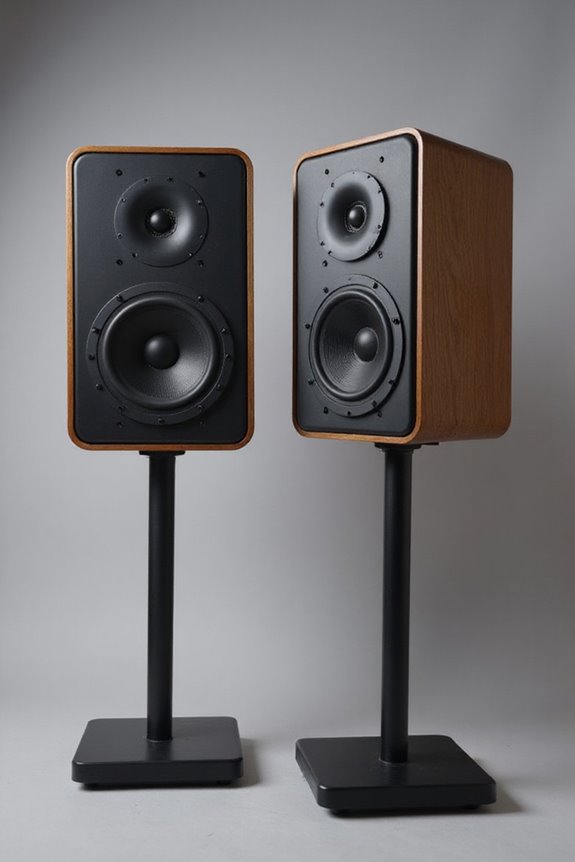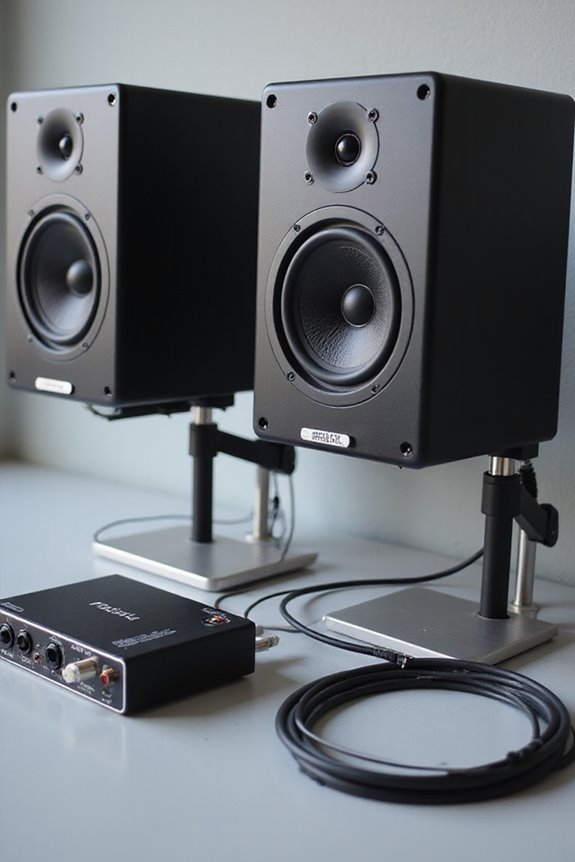
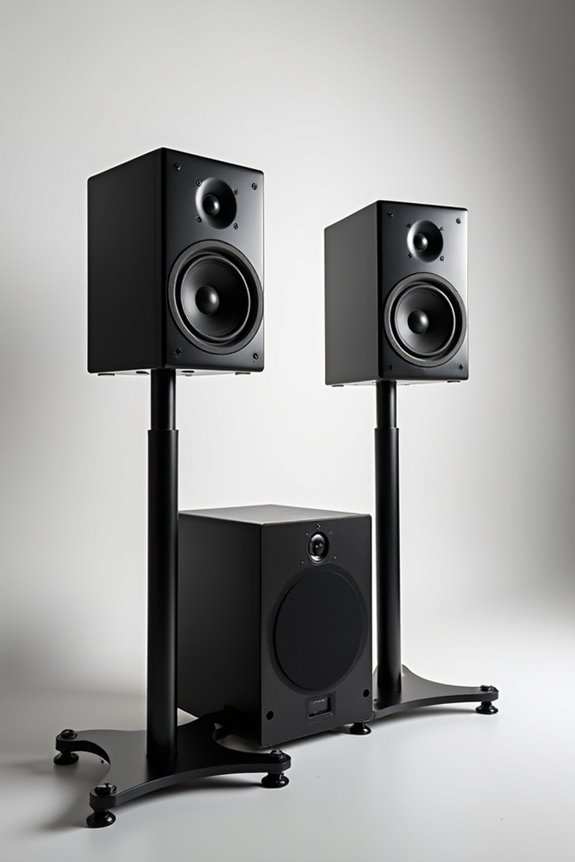

When you’re mixing music, a subwoofer can be a game-changer! 🎶 It helps us hear those deep bass frequencies, like kick drums and bass lines, that studio monitors might miss. For instance, the JBL Professional LSR310S offers incredible response down to 27 Hz. If your room is medium-sized, adding a sub can improve clarity and control down to 80 Hz! 🎛 If you’re curious about how a subwoofer setup can enhance your mix, let’s explore!
Key Takeaways
- Subwoofers enhance low-frequency clarity, making it easier to differentiate elements like kick drums and bass lines in your mix.
- If your studio monitors struggle with low-end response, a subwoofer can significantly improve mixing precision and overall sound quality.
- Medium-sized rooms often benefit from subwoofers to provide extended bass range and prevent muddiness in mixes.
- Proper acoustic treatment and monitor placement can sometimes reduce the need for a subwoofer in smaller spaces.
- Setting up a subwoofer requires careful calibration of crossover frequency and phase alignment for optimal sound integration with studio monitors.
Understanding the Role of Subwoofers in Music Production
You may be interested



When we immerse ourselves in music production, understanding the role of subwoofers can truly make a difference! Subwoofers, like all subwoofer types, are designed to expose low-frequency details that our studio monitors might miss. They don’t just make bass louder; they clarify it, helping us differentiate elements like kick drums and bass lines. With the right setup, we can achieve studio monitor compatibility by adjusting crossover frequency and phase controls. This precise integration boosts our mixing accuracy below 120 Hz, aiding in better EQ decisions. So, having a sub in our setup prevents phase cancellation, clearing the low end for a truly engaging sound experience! 🎶 Additionally, a subwoofer like the JBL Professional LSR310S Subwoofer can enhance your sound experience by delivering deep low-frequency response down to 27Hz. Let’s get those mixes translating beautifully across all playback systems!
Benefits of Extended Frequency Range With Subwoofers
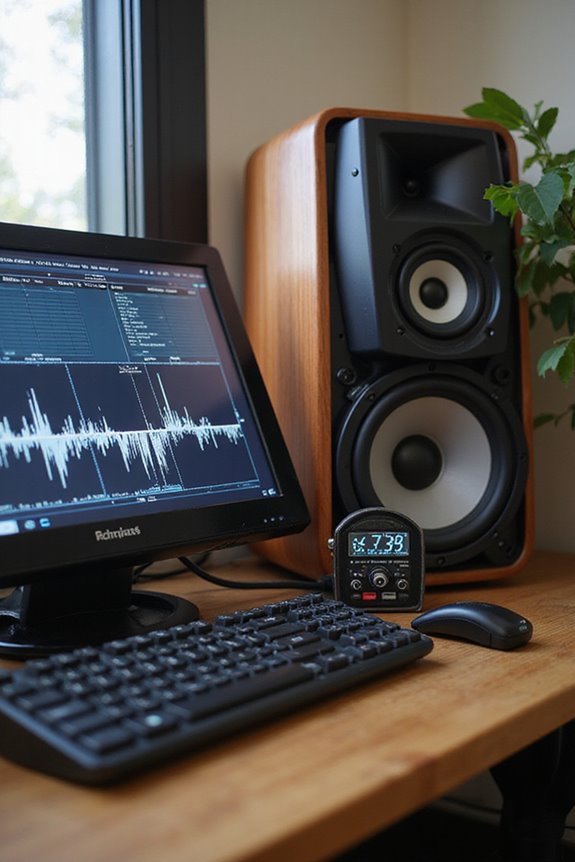
With subwoofers often reaching down below 40 Hz, we can enjoy a full-spectrum audio mix that’s essential for accurate sound design. Plus, those subtle high-frequency details, sometimes reaching 40 kHz, guarantee that instruments and vocals have depth and texture. So, when we pair subwoofers with studio monitors, our listening sessions become more engaging and enjoyable! Let’s not miss out on that! 😄 Additionally, incorporating a subwoofer can enhance overall sound quality by providing flat frequency response that eliminates sound coloration, making it easier to hear every detail in our audio.
Recommended Products
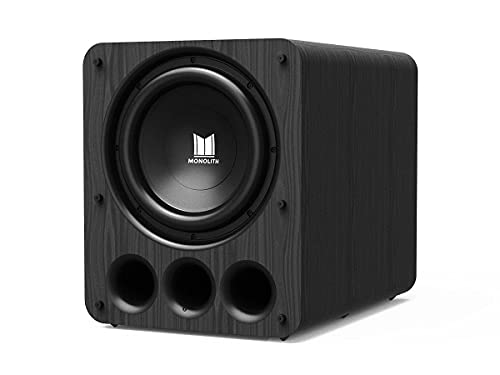
THX Ultra Certified: THX engineers completed hundreds of different scientific tests to ensure the highest audio performance possible. The tests ensure the speaker can reach the high volumes necessary to achieve THX Reference Level, without creating audible distortion or artifacts. THX Ultra Certified products are designed for large rooms, up to 3,000 cubic feet in size, with a 10~12 foot viewing distance from the screen.

Precise Low-End Control – Dual 8" Slatefiber woofers deliver neutral, dynamic bass from 32Hz to 120Hz.

EXCEPTIONAL SOUND PERFORMANCE - Savor the ultimate listening experience by pairing a fully loaded high fidelity turntable with endlessly versatile, room-filling 120-watt powered bookshelf speakers
Improved Low-End Control for Mixing Accuracy
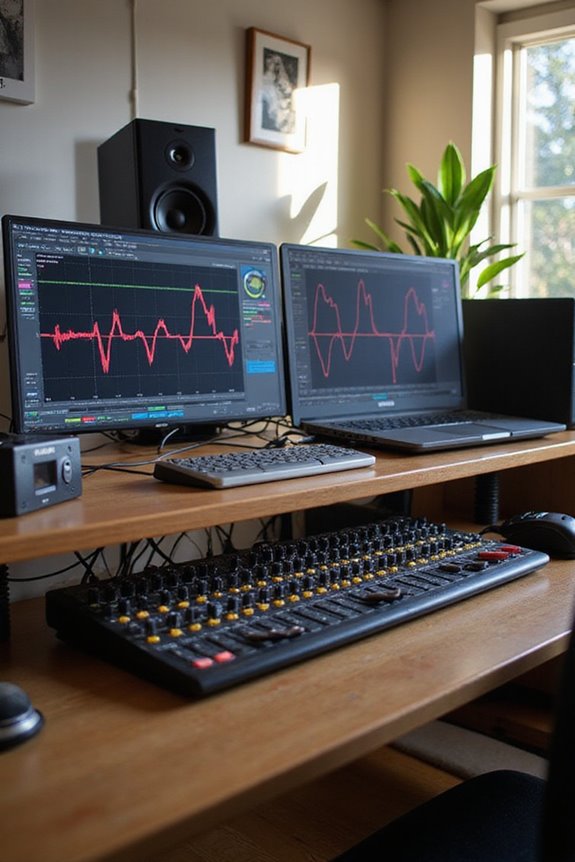
Although we might love our studio monitors for their compact design and portability, they often fall short in delivering the precise low-end control we need for mixing accuracy. That’s where subwoofers come into play! By enhancing low-end clarity, they help us achieve better mixing precision. With a subwoofer, we can isolate those sub-bass frequencies below 80 Hz, making it easier to define our mixes. This means we can tackle muddiness and guarantee bass elements like the kick and bass guitar shine through! 🎶 Plus, monitoring lows accurately allows us to make informed EQ and compression decisions, preventing clashes between instruments. Therefore, it’s crucial to have a setup with excellent frequency response to ensure all audio elements are balanced. So, if you’re serious about your mix, consider adding a subwoofer to bring that low end to life!
Recommended Products

Hear next generation audio conversion with the widest dynamic range and lowest distortion of any Apollo

Hear next generation audio conversion with the widest dynamic range and lowest distortion of any Apollo

256W Powered Studio Subwoofer with 10" Driver
Considering Room Size and Acoustic Treatment
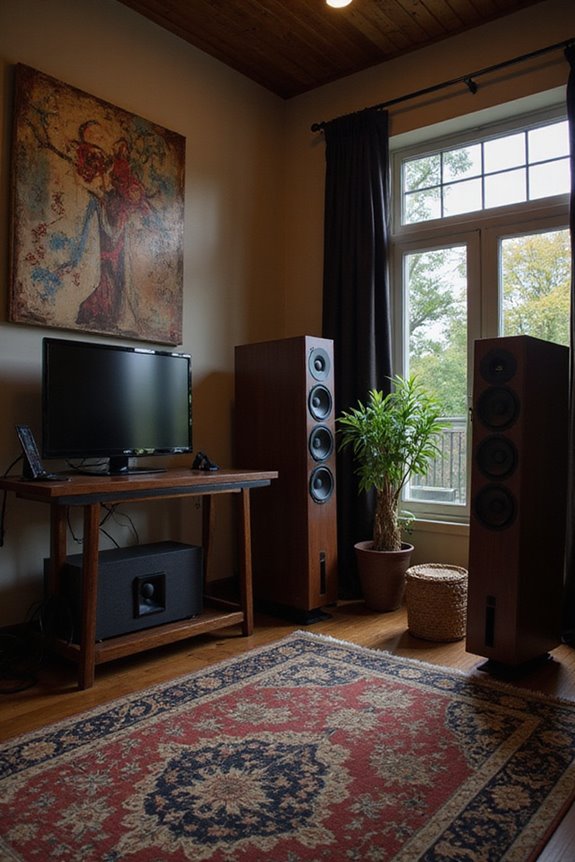
Choosing the right setup for your studio isn’t just about the gear—it’s also about the space! The size of your room dimensions plays a huge role in whether you’ll need a subwoofer. For smaller rooms, your monitors might do the trick if they’re positioned well. In medium spaces, a subwoofer like the TS110 or TS112 can enhance those low frequencies that make your mixes shine. Don’t forget about acoustic absorption! Proper treatment, like bass traps or diffusers, helps manage room modes, which might mean you won’t need a subwoofer after all. By focusing on those first reflection points and careful monitor placement, you can optimize your setup and create the perfect environment for your sound. 🎶 Additionally, monitors with acoustic tuning features can further enhance your listening experience by adapting to your room’s unique characteristics.
Recommended Products
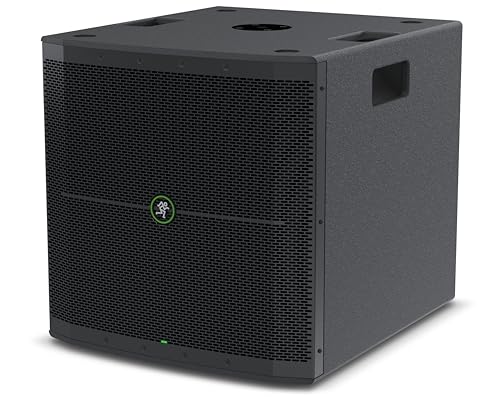
1400W Class-D amplifier is designed for ultra-reliable, consistent performance

Mackie Thump15Sv4 is a professional powered subwoofer that adds that extra “oomph” to your PA system, shaking the floorboards with massive bass that gets people on their feet.

Spun Copper IMG Woofer: Spun copper front-firing cerametallic woofers help create tight musical bass | All Digital Amplifier: The all digital amplifier of this sub delivers 200 watts continuous, 400 watts dynamic power
Challenges of Subwoofer Setup and Integration

Setting up a subwoofer can feel a bit like trying to solve a puzzle, especially when we consider how to integrate it with our studio monitors. First, we’ve got cabling considerations; connecting our left and right monitor outputs to the subwoofer’s inputs is vital. But don’t forget to check your manuals for those dedicated outputs!
Phase alignment is another biggie! If our sub isn’t synced up, we’ll end up with muddy bass or thin sounds. So, adjusting the phase switch and finding the right placement is essential. Plus, remember to calibrate the crossover frequency, ensuring our monitors and sub share the bass load harmoniously. With patience and careful adjustments, we can create a rich, balanced sound that feels just right! 🎶 Additionally, using adjustable height stands can help position our monitors at the optimal listening level, further enhancing sound integration.
Recommended Products

10-inch composite low frequency driver

10" glass aramid composite woofer

Big sub-low end. 10-inch, front-firing, glass-composite, low-frequency transducer.
When Studio Monitors May Be Sufficient
When considering our audio setup, it’s worth noting that studio monitors can often shine on their own, especially in specific scenarios. For instance, when we’re focused on monitoring spoken-word content like podcasts or audiobooks, we can appreciate the studio monitor advantages of having clear acoustic clarity without a subwoofer. If we’re in a small, acoustically treated room, properly sized monitors can deliver a full range of sound while keeping bass manageable. Plus, for genres like classical music, where low frequencies aren’t a priority, studio monitors handle midrange and highs effectively. All in all, with larger monitors (8-inch or more!), we often find they’re sufficient, eliminating the need for extra hardware and keeping things simple! 🎶 Additionally, larger monitors such as the JBL 305P MkII and Yamaha HS5 are designed to optimize sound reproduction, making them ideal choices for achieving great audio fidelity without a subwoofer.
Benefits of Subwoofers Beyond Frequency Extension
To begin with, they enhance bass dynamics, reproducing every low note with clarity and precision. This means you’ll hear the subtle details of your favorite tracks, from kick drums to pipe organs, like never before!
Moreover, subwoofers allow for distortion-free playback at higher volumes, keeping your music crisp and clear. No more muddiness! 🔊
They also improve bass transient response, preserving the timing and impact of each note. This adds a powerful tactile presence, leading to greater audio immersion.
In short, a subwoofer enriches your listening experience and can elevate your overall production quality!
Evaluating Your Specific Needs for Bass Monitoring
Next, think about your room size and acoustics. In smaller spaces, we may benefit from near-field monitors to avoid muddiness, while bigger rooms might accommodate a subwoofer better.
Finally, if your production genre demands clarity in low frequencies—say, for sound effects in post-production—then a subwoofer will enhance our monitoring experience! So, let’s evaluate our needs and make an informed choice! 🎶
Recommended Products

LS60 Wireless aims to bring high-fidelity sound to more people in their homes. With the combination of all our key technologies, LS60 Wireless delivers high-fidelity sound up to 24bit/384kHz.

3-way studio monitor with 6.5-in. aluminum cone subwoofer, 3.5-in. aluminum-cone midrange driver, and a 1-in. dual radiator tweeter
Frequently Asked Questions
Can a Subwoofer Damage My Studio Monitors?
Think of subwoofer impact like a bridge; if it’s stable, we cross safely. We should guarantee monitor compatibility while managing settings and isolation, so our studio monitors stay protected from potential vibrations and interference.
What Is the Ideal Size for a Subwoofer?
When considering the ideal subwoofer size, we should think about our room’s volume and acoustic needs. Subwoofer types differ, and the right frequency response will enhance our sound without overwhelming our space or mixes.
How Do I Know if My Room Needs a Subwoofer?
When it comes to our room acoustics, we should listen closely. If our monitors struggle with low-end frequency response, adding a subwoofer might be the key. Let’s find that perfect sound together!
Are There Specific Brands Recommended for Studio Subwoofers?
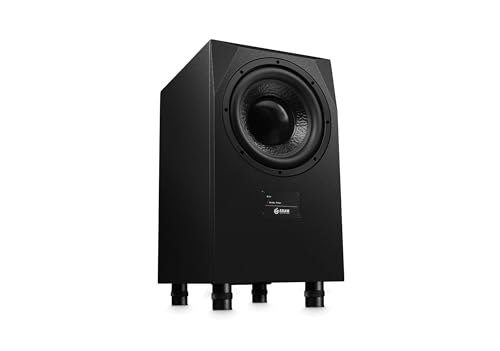
When exploring studio subwoofer brands, we’ve found that popular studio models like Adam Audio Sub8, KRK S10.4, and Yamaha HS8S enhance our sound experience, offering precision and versatility for any creative environment.
Can I Use a Home Theater Subwoofer for Studio Monitoring?
Like trying to fit a square peg into a round hole, using a home theater subwoofer for studio monitoring presents compatibility challenges. For true studio monitor integration, we should prioritize tools designed for accuracy and precision.