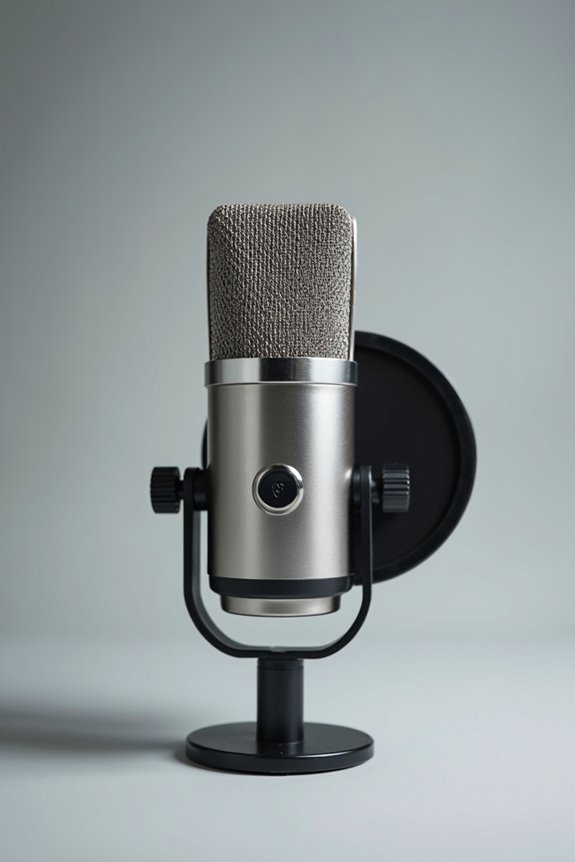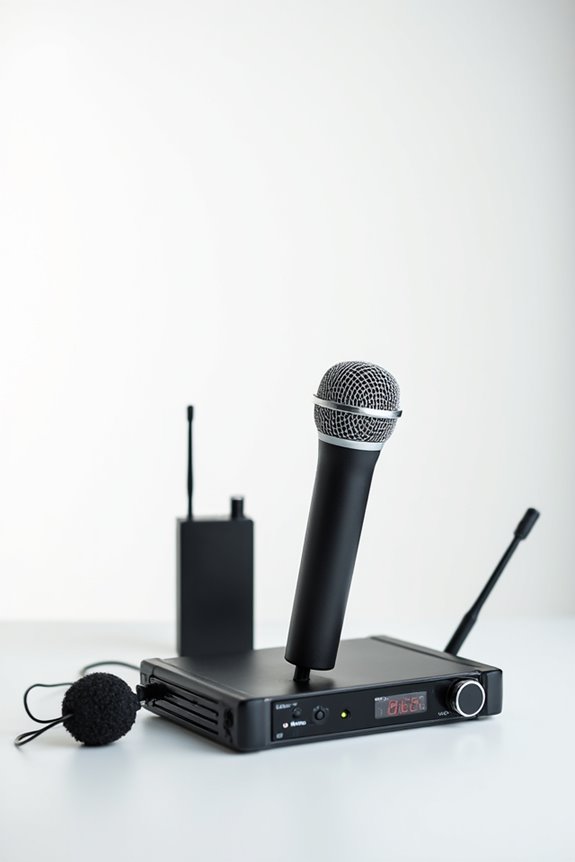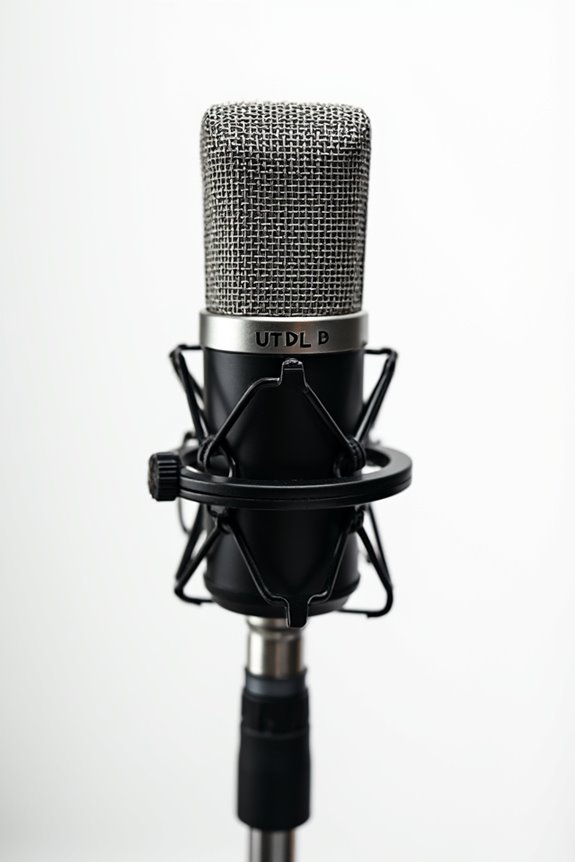
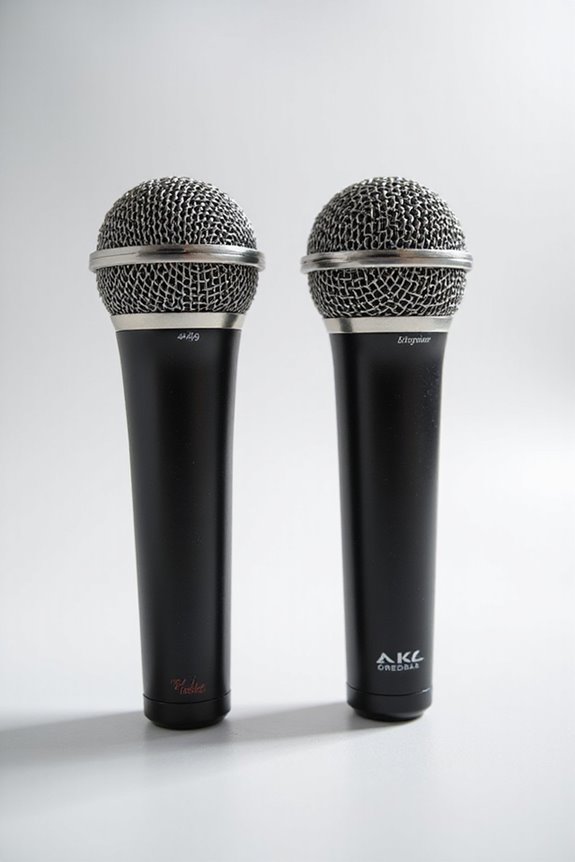

When choosing between dynamic and condenser microphones, we notice key differences! Dynamic mics use electromagnetic induction and handle loud sound, making them perfect for live settings 🎤. On the other hand, condenser mics capture delicate sounds and are sensitive, ideal for studio environments 🎶. Dynamic mics are durable and don’t need power, while condensers typically need phantom power. These choices impact sound quality markedly, so let’s explore how to select the best mic for your needs!
Key Takeaways
- Dynamic microphones use electromagnetic induction and do not require external power, while condenser microphones rely on a charged diaphragm and backplate capacitor.
- Dynamic mics handle high sound pressure levels well, making them ideal for loud environments; condensers are more sensitive and suited for delicate sounds.
- Dynamic microphones are more durable and resist moisture, while condensers have delicate components susceptible to damage in rugged settings.
- Directionality varies: dynamic mics often use cardioid patterns for noise rejection, whereas condensers offer versatile polar patterns for different recording scenarios.
- Dynamic microphones are best for live sound and close miking, while condensers excel in studio settings for vocal and acoustic instrument recordings.
Working Principle of Dynamic and Condenser Microphones
You may be interested

When it comes to microphones, understanding the working principles of dynamic and condenser types can feel a bit like deciphering ancient hieroglyphs! 😊 Let’s break it down together.
First, the dynamic microphone design uses electromagnetic induction. Here, a coil attached to a diaphragm moves within a magnetic field, generating an electric current that mirrors the sound waves. It’s passive, meaning it doesn’t need external power!
On the other hand, condenser microphone components include a charged diaphragm and a fixed backplate that form a capacitor. When sound waves vibrate the diaphragm, it changes capacitance, producing accurate voltage variations. However, it requires external power—like phantom power—to keep things electrified!
In short, we benefit from understanding how these microphones convert sound into electrical signals—even if it feels like science magic! 🎤✨
Sound Sensitivity and Frequency Response
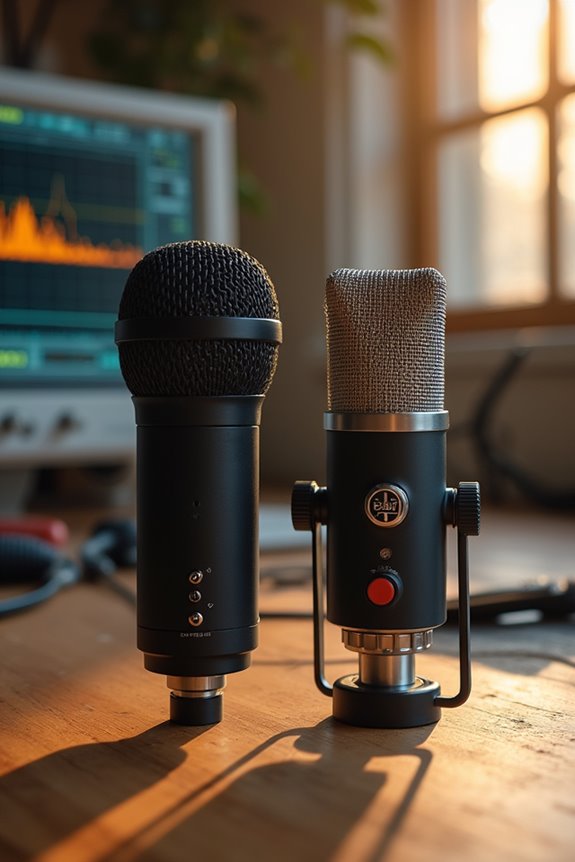
Understanding sound sensitivity and frequency response is essential for choosing the right microphone for your needs! 🌟 While dynamic microphones shine in loud environments with their robust build, condenser microphones take the lead when it comes to capturing delicate sounds. Condensers boast higher sensitivity levels, making them perfect for quiet recordings, as they pick up even the softest nuances. In contrast, dynamic mics handle high sound pressure levels, effectively minimizing background noise. When it comes to frequency accuracy, condenser mics cover 20 Hz to 20 kHz, providing a rich sound detail that enhances your recordings. Dynamic mics, however, have a narrower response, rolling off higher frequencies. By understanding these differences, you’ll know which mic will suit your environment and needs best! 🎤 Additionally, high signal-to-noise ratios in microphones are crucial for ensuring clarity and reducing interference in recordings.
Durability in Different Environments
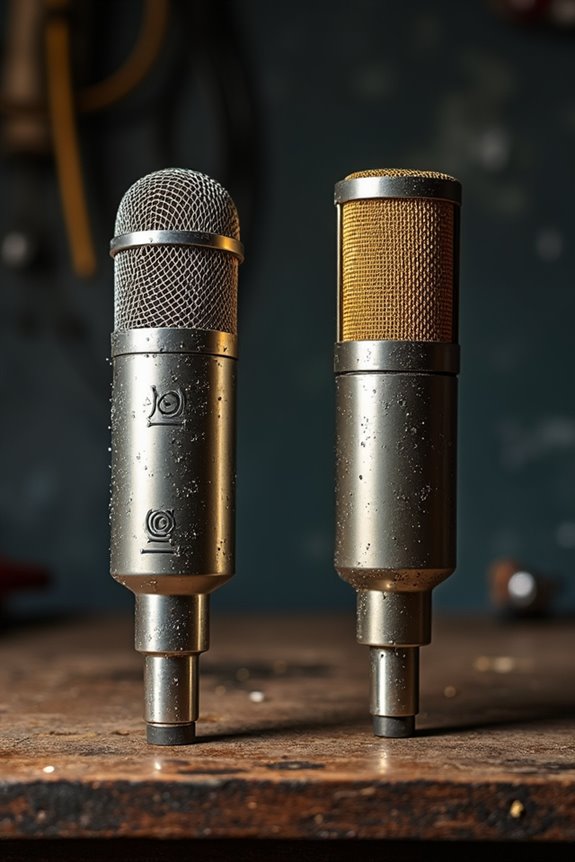
While it may seem that all microphones are created equal, their durability can vary considerably in different environments! 🎤 Dynamic microphones shine with their robust moving coil assemblies, built for field durability. They handle rough handling and resist moisture, humidity, and temperature swings—perfect for live gigs!
On the flip side, condenser microphones have delicate components that don’t fare well under extreme environmental conditions. They require careful handling and are more susceptible to damage from drops or high humidity.
In short, if you’re on stage often, dynamic mics will serve you better thanks to their sturdiness and lower maintenance needs. Additionally, rugged microphones like the TASCAM TM-82 exemplify durability, making them suitable for both studio and live settings. So, when choosing, think about where you’ll be using your gear!
Directionality and Polar Patterns
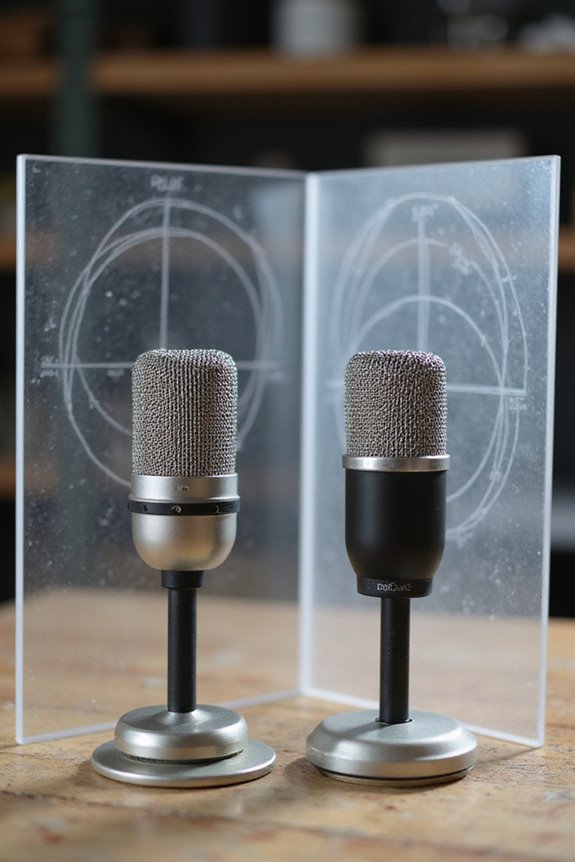
Directionality plays an essential role in how we experience sound, and it’s fascinating! 🎤 Microphones have various polar patterns, impacting everything from studio recording to live performances. Let’s explore these polar patterns, shall we?
- Cardioid: This heart-shaped pattern captures sound in front while rejecting noise from behind, making it perfect for vocals and instruments.
- Omnidirectional: It picks up sound equally from all directions, ideal for capturing room ambiance but not so great in noisy settings.
- Bidirectional: Also known as figure-8, it captures sound from the front and back, perfect for interviews!
- Shotgun: This highly directional pattern focuses on sound directly in front, excellent for video production. Additionally, cardioid-pattern microphones are often recommended for minimizing ambient noise, ensuring clearer vocal recordings.
Understanding these directional sensitivities can truly elevate your recording game!
Power Requirements and Noise Floor
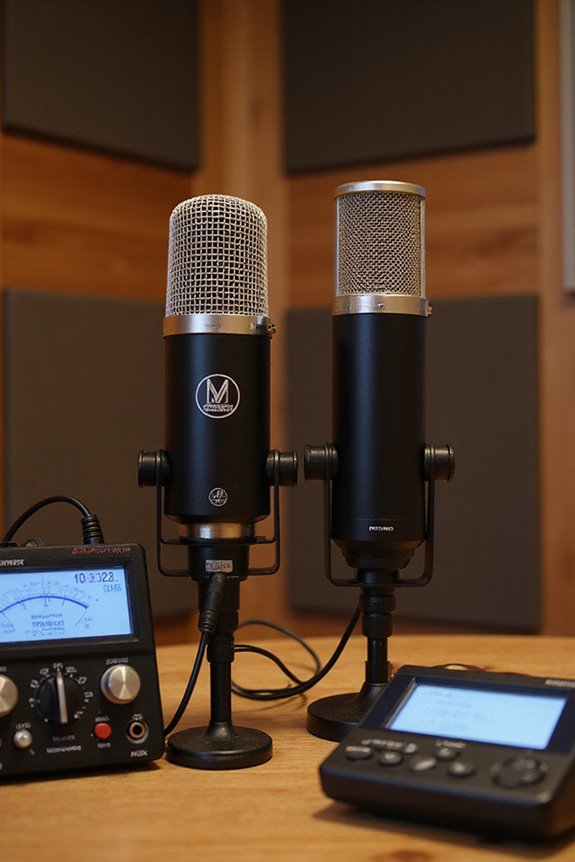
When it comes to microphones, we can’t overlook how power requirements and noise floor impact our recording experience! 🎤 Dynamic mics are our go-to choice for simple setups since they don’t need phantom power. They’re ready to roll right away, making them perfect for on-the-go recordings. However, their noise characteristics include a higher noise floor due to lower sensitivity, which can mean background noise sneaks in during quieter moments.
On the other hand, condenser microphones require phantom power to function. This makes them sensitive and great for capturing subtle details, resulting in a lower noise floor. Just be cautious—they can pick up environmental sounds more easily. Additionally, choosing the right microphone can enhance your audio recording quality, so pick what suits your vibe!
Common Applications for Dynamic Microphones
Dynamic microphones shine in various applications, making them a favorite for many audio professionals and enthusiasts alike! 🎤 They’re the go-to choice for live sound reinforcement, thanks to their toughness and ability to handle high sound pressure levels (SPL) without distorting.
In live performance settings, we often see them capturing powerful vocals, especially in rock and rap genres. Their directional patterns help isolate the sound, reducing stage bleed.
For studio recording, these mics shine as close mics on drums and guitar amps, delivering punch without losing clarity.
Furthermore, they’re durable enough for broadcasting and podcasting, ideal for enthusiastic voices that can sometimes get a bit loud! So, if you’re looking for reliability, dynamic microphones are definitely our MVPs! Additionally, models such as the MAONO PD300X provide dual connectivity options for both beginners and professionals, enhancing their versatility in various audio setups.
Recommended Products

Accompaniment Styles add a "backing band" when you play or perform for dynamic and professional results. Customize and personalize your music while maintaining control over chord changes and arrangements.

Portable hybrid event switcher with comprehensive features and connectivity

Common Applications for Condenser Microphones
Condenser microphones are the gold standard in many recording scenarios, and it’s easy to see why! 🎤 With their high sensitivity and ability to capture subtle details, they excel in studio vocal recording, making them a favorite choice for artists and podcasters alike.
In studio recording, large-diaphragm condensers provide warmth and clarity, enhancing the overall vocal presence. For those podcasting applications, their clear, detailed sound gives your voice the attention it deserves.
Whether we’re capturing acoustic instruments or room ambiance, these mics offer flexibility with multi-pattern options, adapting to our creative needs. Their low self-noise guarantees our recordings stay clean and professional. Additionally, many advanced noise cancellation features ensure that background noise is minimized, further enhancing recording quality. So, if you want to sound your best, reaching for a condenser mic is a smart choice!
Recommended Products

The legendary AKG sound used on dozens of number-1-hits an enhanced version of the highly sought-after AKG C12 built 1953-1960.

Large-diaphragm Condenser Microphone

Three distinct tube microphones at the flip of a switch. FORWARD is bold, present and modern, but never harsh. NEUTRAL is smooth and earthy with a natural balancing of sibilant sounds. GENTLE is dark and sultry with a warm vintage feel, ideal for taming bright or abrasive sound sources.
Advantages of Dynamic Microphones
While condenser microphones are fantastic for capturing nuanced sounds in the studio, we can’t overlook the advantageous qualities of dynamic microphones. First off, they’re incredibly cost-efficient! You get great quality without breaking the bank. Plus, their durable construction means they can handle high sound pressure levels, making them perfect for loud instruments like drums and guitar amps.
Dynamic mics also thrive in live settings, thanks to their resistance to moisture and temperature changes. We love how they don’t require phantom power—this makes setup easier! Their controlled frequency response, especially around 800 Hz, adds presence to vocals. With options like cardioid patterns for noise rejection, dynamic microphones are a reliable choice when you need simplicity and performance on stage! 🎤✨
Recommended Products

4K full-frame sensor w/ 15+ stop dynamic range and high sensitivity

8 award-winning Midas PRO mic preamps and 8 Midas PRO outputs onboard

Matched Pair Studio Grade Professional Large Diaphragm Vocal and Instrument Condenser Microphone with Rugged Aluminum Carrying Case. XLR Connector. Astounding sound quality for lead vocals and solo instruments
Advantages of Condenser Microphones
With versatile polar patterns, they adapt to various recording setups, helping isolate sound sources beautifully. Plus, their lightweight design reduces handling noise, giving you cleaner audio. Sure, they need phantom power, but that just means you’re getting excellent sound quality!
Recommended Products

Circuit topology Four dual triode vacuum tubes (Sovtek 6922), high-voltage discrete Class A

For Recording Studios and Touring

DuoPre XLR Microphone preamps, including 48V Phantom power for condenser microphones and up to 69dB of gain. Each preamp uses two gain stages to provide a full and accurate sound across the entire gain range with enough power for even the most gain hungry mics.
Choosing the Right Microphone for Your Needs
Choosing the right microphone can feel a bit overwhelming, especially when you’re faced with the dynamic versatility of condenser mics versus the rugged reliability of dynamic ones. 🎤 Depending on what you’re recording—whether it’s a quiet acoustic session or a loud rock concert—your choice can greatly impact your sound quality.
For microphone selection, consider your recording environment. If you’re in a studio, a condenser mic will capture rich details, perfect for vocals or delicate instruments. However, if you’re jamming with a loud band, a dynamic mic’s durability and sound isolation shine! Plus, they don’t need extra power, making them a breeze to set up. Ultimately, knowing your needs can make all the difference in producing great sound. Happy recording! 🎶
Recommended Products

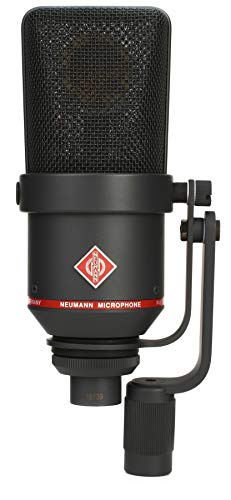
Large-diaphragm Transformerless Condenser Mic with 5 Switchable Polar Patterns

Custom-wound Manley output transformer for that big MANLEY sound!
Frequently Asked Questions
Can I Use a Dynamic Mic for Studio Recording?
Absolutely, we can use a dynamic mic for studio recording! Their studio versatility and solid build enhance our recording quality, especially with loud instruments and in untreated spaces, making them reliable tools for our creative endeavors.
Are Condenser Microphones More Expensive Than Dynamic Microphones?
In our cost comparison, we’ve noticed that condenser microphones generally have higher price tags due to their intricate features. While entry-level options exist, many professionals prefer them for their superior audio quality, justifying the investment.
How Do Dynamic Mics Handle High Sound Pressure Levels?
When we talk about high SPL handling, dynamic mics shine. Their robust design means they manage intense sound pressure without distortion, making them perfect for live performances. We can rely on them for clean, powerful sound capture.
What Are the Best Brands for Condenser Microphones?
When exploring the best condenser brands, we’ve found reviews highlighting AKG, Neumann, and Audio-Technica as top choices. These brands consistently deliver exceptional quality, making them favorites in our community of audiophiles and recording enthusiasts.
Do Dynamic Microphones Require Special Accessories or Adapters?
Think of dynamic microphones as the sturdy friends we all love—they don’t need fancy accessories or adapters to shine. Sure, a pop filter or shock mount adds flair, but they’re not strictly necessary. We’ve got this!