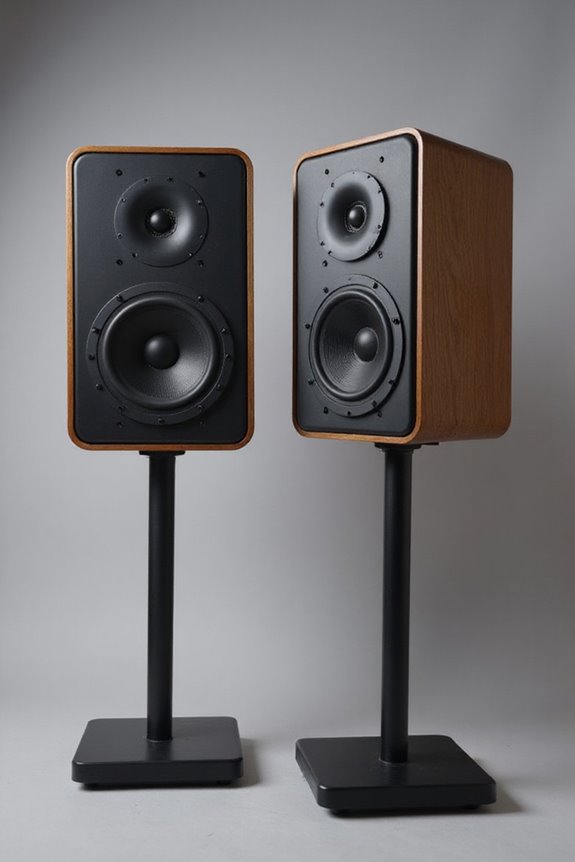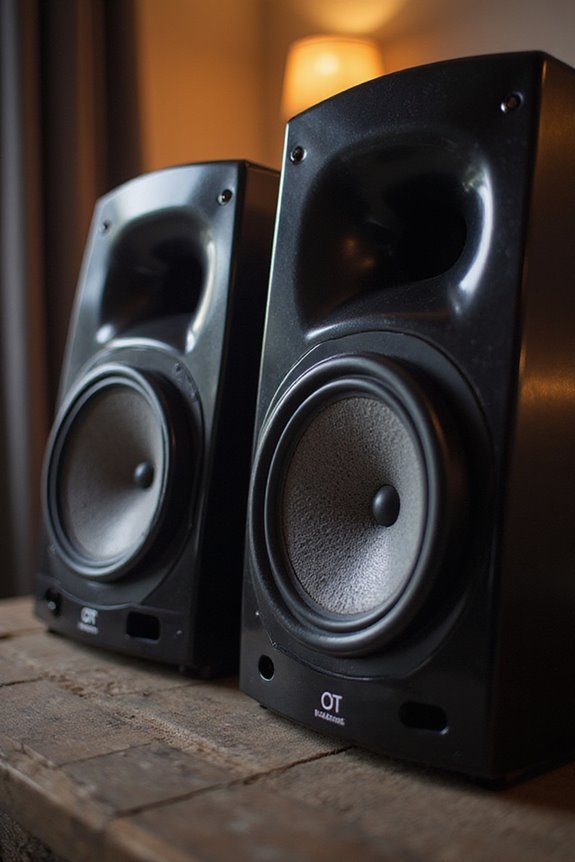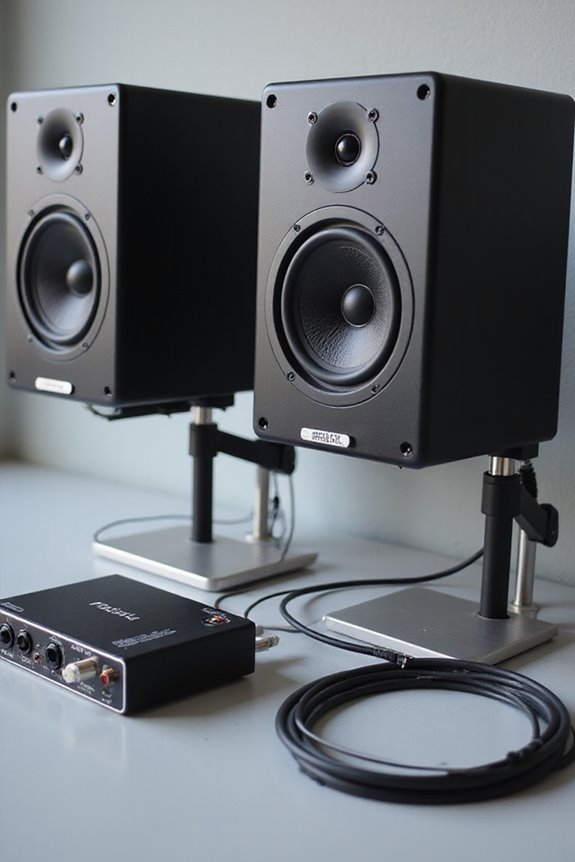
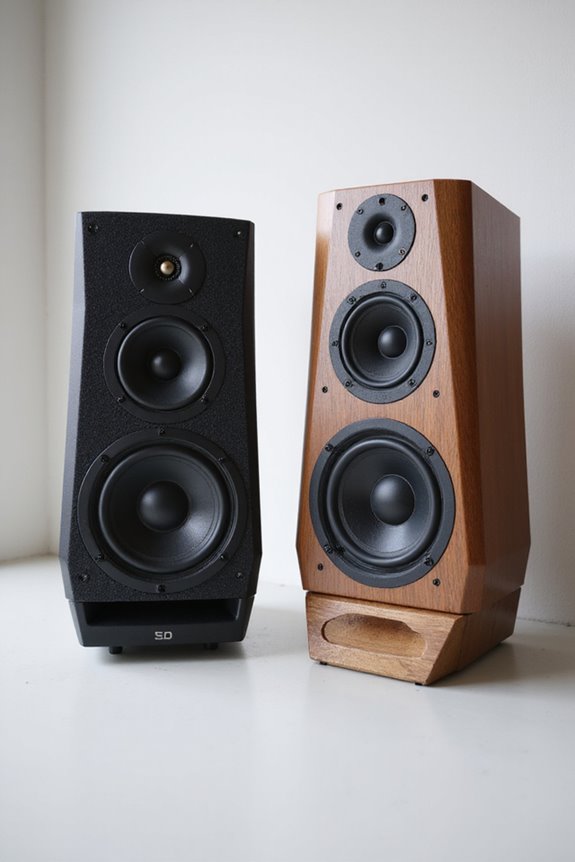

When it comes to mixing, studio monitors are definitely the way to go! 🎛 They’re designed for accurate frequency response, revealing every detail in your sound—perfect for crafting balanced mixes. Unlike Hi-Fi speakers, which boost certain frequencies for casual listening (hello bass!), studio monitors offer flat response and clarity. This means your mixes translate well across different systems! If you stick with us, we’ll share more insights on choosing the perfect speaker setup for your needs.
Key Takeaways
- Studio monitors provide a flat frequency response, offering accurate sound reproduction essential for effective mixing and identifying flaws.
- Hi-Fi speakers enhance certain frequencies, which can mask mix imperfections, leading to an unbalanced sound in professional contexts.
- Proper placement of studio monitors is crucial for achieving optimal sound accuracy and clarity during mixing sessions.
- Studio monitors typically feature built-in amplification, resulting in simpler setup compared to passive Hi-Fi speakers requiring external amplifiers.
- Relying solely on Hi-Fi speakers for mixing risks developing mix imbalances; it’s beneficial to use both systems for better translation across setups.
Purpose and Usage of Studio Monitors and Hi-Fi Speakers
You may be interested
When it comes to sound reproduction, choosing between studio monitors and Hi-Fi speakers can feel like deciding between coffee and tea—both are great, but they serve different purposes! Studio monitors are our go-to for mixing because they provide monitor advantages like accurate frequency response and clarity. This helps us spot mix flaws and guarantee balance without ear fatigue. On the flip side, Hi-Fi speakers often enhance certain frequencies, leading to speaker limitations when we’re trying to make precise adjustments. While monitors thrive in recording studios, Hi-Fi systems shine in home settings for casual enjoyment. So, knowing where and how we plan to listen helps us choose the right tool for the job, whether we’re producing or simply vibing to music! 🎶 Additionally, proper speaker placement can significantly enhance the listening experience and ensure optimal sound quality.
Design and Technical Characteristics
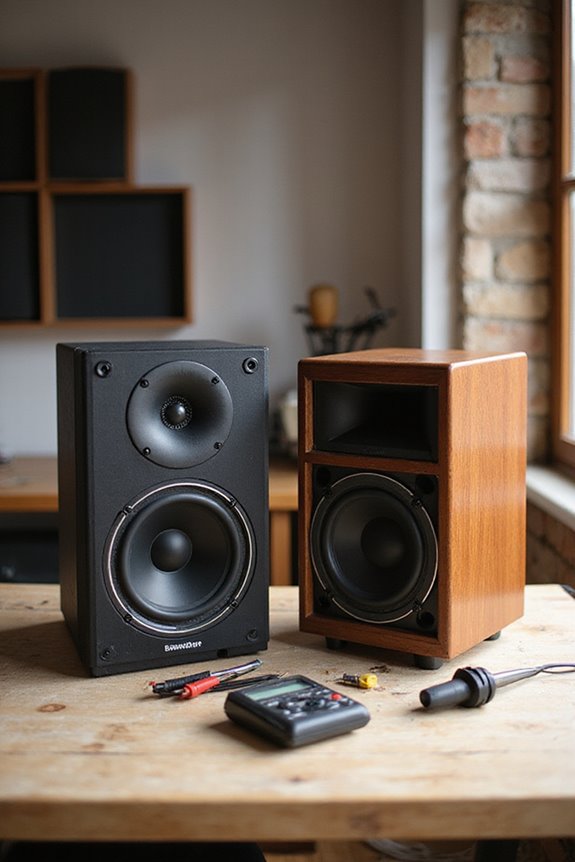
Let’s plunge into the nitty-gritty of studio monitors and Hi-Fi speakers, shall we? 🎵 Studio monitors generally sport an active design, meaning they come with built-in amplification for each driver configuration, like woofers and tweeters. This setup allows for more precise crossover design, enhancing sound clarity and minimizing distortion. Hi-Fi speakers, on the other hand, are often passive, relying on external amplifiers, which can complicate energy distribution among drivers. With studio monitors’ steeper crossover slopes and optimized driver setups, they excel in transient response—perfect for mixing! Plus, their cabinets are built to minimize resonances, creating a more direct listening experience. In contrast, Hi-Fi speakers prioritize aesthetic appeal but might sacrifice accuracy. 🎧 Additionally, studio monitors are designed with high signal-to-noise ratios to ensure audio clarity, making them a preferred choice for professional audio production. So, choose wisely!
Recommended Products
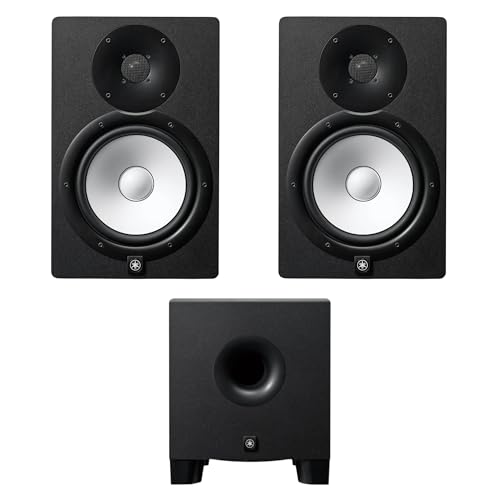
HS8 PAIR + HS8S SUBWOOFER — TWO 8-INCH MONITORS AND AN 8-INCH ACTIVE SUB IN ONE BUNDLE: A 2.1 reference system needs more than a single monitor — you need a matched left-right pair for stereo imaging and a subwoofer to cover the bottom octave your monitors can't reach. This bundle includes two Yamaha HS8 powered studio monitors and the HS8S 8-inch active subwoofer. Music producers, project-studio engineers, and mix engineers building a full-range reference rig — connect, calibrate, mix today.

EXCEPTIONAL SOUND PERFORMANCE - Savor the ultimate listening experience by pairing a fully loaded high fidelity turntable with endlessly versatile, room-filling 120-watt powered bookshelf speakers
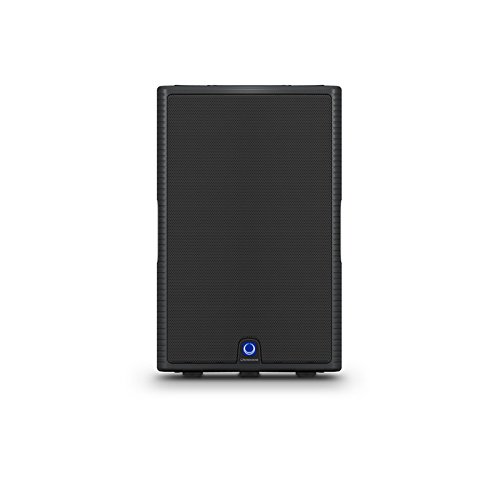
2 way full range powered loudspeaker for portable PA and install applications
Frequency Response and Sound Accuracy
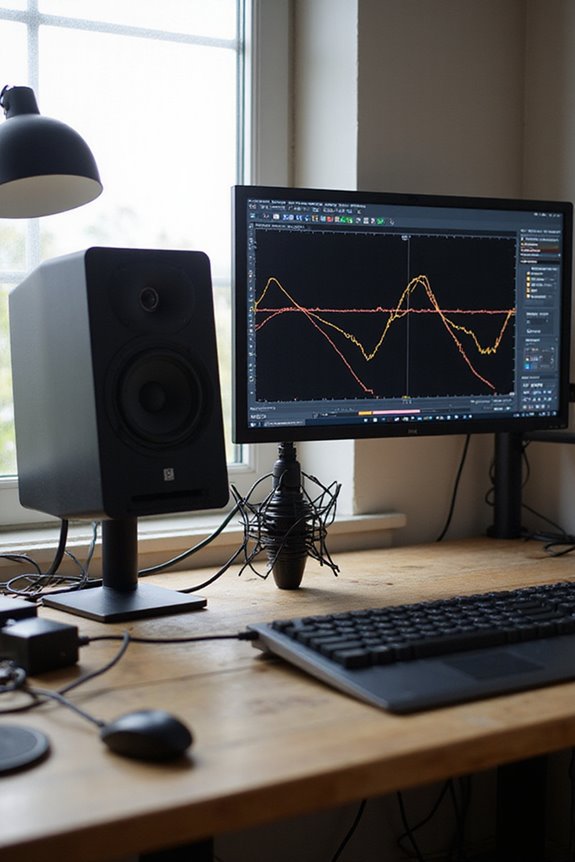
On the other hand, Hi-Fi speakers prioritize musical enjoyment through frequency shaping, often boosting bass or treble to please our ears. However, these enhancements might mask mix issues, leading to unbalanced sounds on other systems. If we’re aiming for precision, choosing studio monitors lets us make more informed mixing decisions! They reveal the true audio content so that our mixes translate well across all playback systems. So, accuracy is key for serious mixing enthusiasts like us! 🎧 Additionally, studio monitors offer excellent frequency response that ensures a rich audio spectrum essential for accurate sound reproduction.
Recommended Products
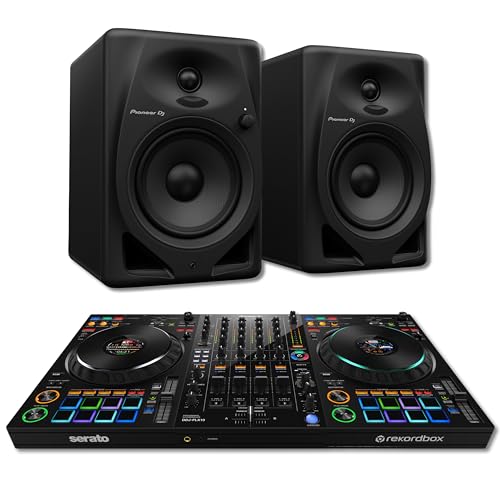
WHAT'S INCLUDED: Pioneer DDJ-FLX10 4-deck Rekordbox and Serato DJ Pro controller and Pioneer DM-50D powered nearfield desktop monitor speakers — a complete professional DJ studio setup with accurate reference monitoring from a matched-brand Pioneer signal chain.

3-way Powered Studio Monitor with 8" LF Driver
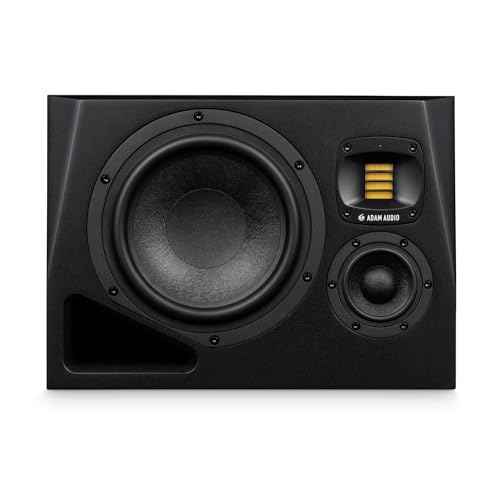
3-way Powered Studio Monitor with 8" LF Driver
Application in Mixing vs. Listening
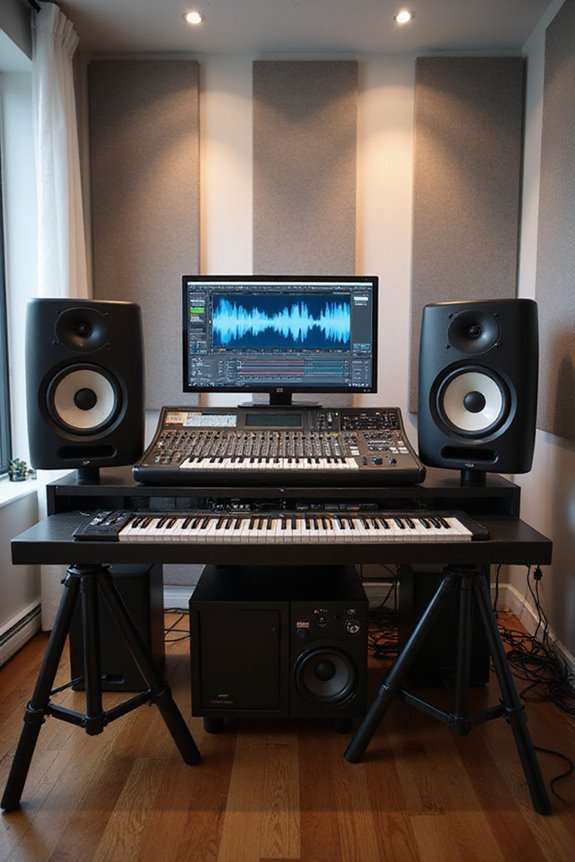
While we might be tempted to think that both studio monitors and hi-fi speakers can serve the same purpose, their applications in mixing and listening differ vastly. Studio monitors are designed for accuracy and flat frequency response, which helps us make critical mixing decisions. In contrast, hi-fi speakers enhance listening pleasure, often masking mix flaws with their musical warmth.
Using effective monitoring techniques on studio monitors guarantees mixes translate consistently across various listening environments. If we rely on hi-fi speakers, we risk developing mix imbalances that sound great at home but might disappoint elsewhere. Ultimately, studio monitors act as reliable reference tools, while hi-fi speakers are perfect for those cozy, music-immersive moments! 🎶 Additionally, studio monitors often come equipped with acoustic tuning features, enhancing their performance in different environments.
Recommended Products

This product is sourced from an authorized Soundcraft North American dealer and includes the official Soundcraft manufacturer’s warranty. The warranty is valid only for products purchased from authorized Soundcraft North American dealers within the United States.
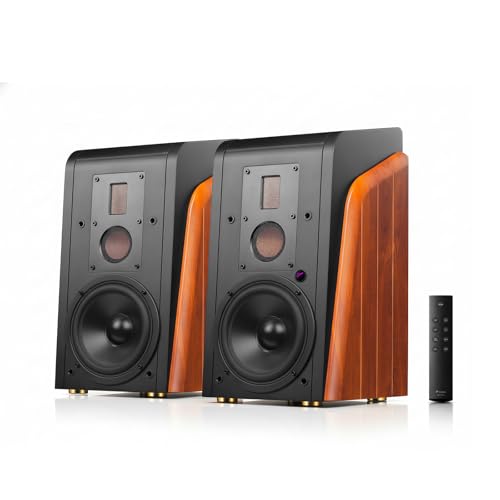
PREMIUM POWERED SPEAKERS - A compact 3-way home audio system featuring a patented isodynamic ribbon tweeter for high frequencies up to 40kHz, a 2" metal midrange driver for vocals and strings, and a 6.5" woofer for deep, punchy bass.
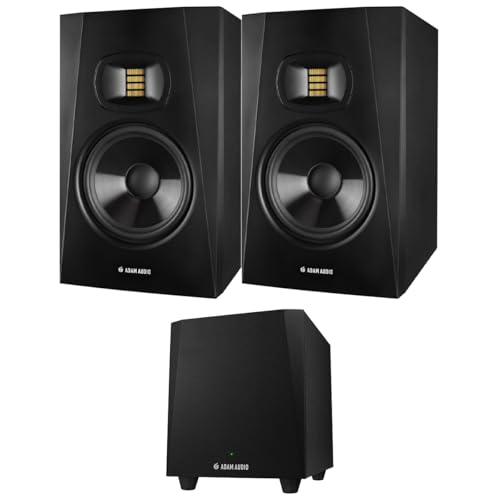
INCLUDED - 2x Adam Audio T7V Monitors, 2x Power Cords, Quick Start Guide, Adam Audio Warranty, & Adam Audio T10S Subwoofer for a full studio sound setup.
Practical Considerations and Setup
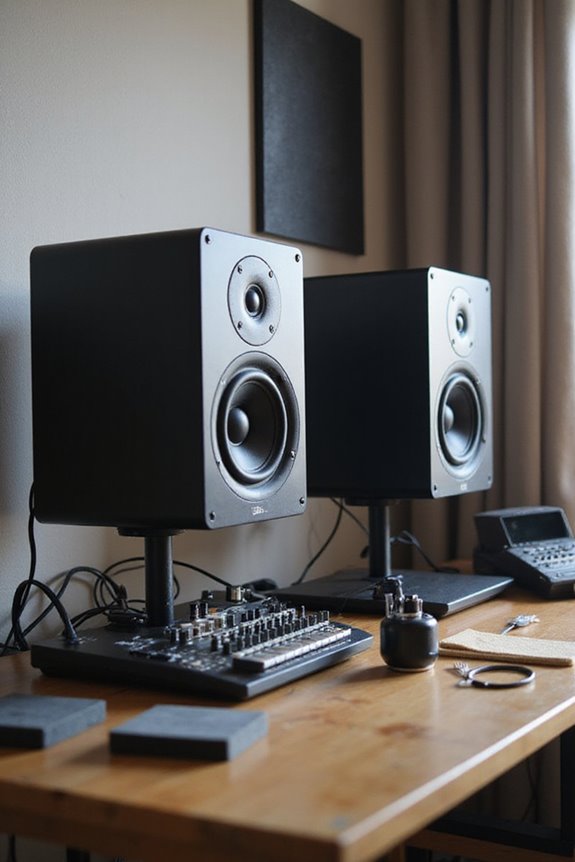
How do we navigate the practical considerations of setting up studio monitors versus hi-fi speakers? First off, room acoustics play a huge role! Studio monitors, with their active design, connect directly to power and require minimal setup fuss. You’ll love that they reduce noise with balanced inputs, keeping distractions at bay. Hi-fi speakers can be trickier. They rely on external amplifiers, which means compatibility matters for peak performance. Plus, they need more room to breathe, unlike the nearfield capabilities of studio monitors. Don’t forget—proper placement can make all the difference! Additionally, studio monitors often feature versatile connectivity options, allowing for seamless integration with various audio setups. So, while our hi-fi friends give us fun, studio monitors bring precision to the table. It’s about finding what fits your space and needs!
Recommended Products

INCREDIBLE IMAGE QUALITY: Features Super 35 image sensor with native resolution of 6144 x 3456 and an active EF/EF-S lens mount; 13 stops of dynamic range to capture even the slightest details; Dual gain ISO up to 25,600 to minimize grain and noise in all lighting conditions; Built-in 2, 4, and 6 stop ND filters.

Aluminum/magnesium inverted dome tweeter

[ Hi-Res Audio with Pro-Grade Sound Customization ]: Experience unmatched clarity with planar magnetic tweeters and 6.5” aluminum woofers (38Hz-40kHz). Tailor your listening with 4 professional EQ presets: Classic, Monitor, Dynamic, and Vocal, optimized for music, movies.
Industry Preferences and Trends
Maneuvering the preferences and trends in the audio industry reveals a fascinating landscape shaped by both professional needs and listener desires. We see emerging trends where the lines blur between studio monitors and Hi-Fi speakers. While studio monitors remain essential for their flat sound profiles—ideal for mixing—they’re increasingly accessible thanks to market diversification, catering to budding producers.
On the flip side, Hi-Fi speakers are still a go-to for casual listeners who crave that rich, engaging sound experience. As digital signal processing technology advances, we’re witnessing innovative designs that marry accuracy with enjoyment! Isn’t it exciting? 🎶 Additionally, many musicians and content creators are now prioritizing high-resolution capabilities to ensure superior sound quality in both their mixes and listening experiences. So, whether you’re producing tracks or vibing out, there’s a speaker for every ear!
The Importance of Accuracy in Mixing
When it comes to mixing music, achieving accuracy is essential for ensuring every sound fits perfectly in the overall composition. We all want that mix clarity, right? Accurate frequency reproduction allows us to identify issues without extra muddiness or harshness. With flat response, we hear the sounds as they were recorded—no artificial boosts here! This frequency precision is vital for making equalization decisions that enhance clarity while preventing clashes. Plus, it helps us correctly balance low and high frequencies for any playback system. Trustworthy playback means we can create mixes that translate well across devices, ensuring that our hard work sounds great everywhere! So, let’s aim for that perfect mix together! 🎶
How to Choose the Right Speakers for Your Needs
Choosing the right speakers for your needs can feel like a serious head-scratcher! 🎧 Whether you’re getting into mixing or just want to enjoy your favorite tunes, the right match makes all the difference.
First, think about speaker compatibility with your setup. Are you opting for studio monitors for accurate mixing or hi-fi speakers for that warm, rich sound? Next, budget considerations come into play—studio monitors might demand a higher initial investment, but they’re worth it for clarity and detail.
Don’t forget about the type of connections you’ll need; studio monitors work well with balanced inputs, while hi-fi often relies on external amplifiers. It’s all about finding the best fit to enhance your audio experience!😊
Recommended Products

‘M’-shaped grille following the curve of the speaker driver. Better linearity of the high frequencies

POWERED LOUDSPEAKER SYSTEM - The JBL 4305P Studio Monitor is a completely self-contained powered loudspeaker system featuring high-resolution streaming audio and prosumer connectivity.
The Benefits of Using Both Systems
Utilizing both studio monitors and hi-fi speakers can revolutionize your audio experience! 🎶 By blending these two systems, we get the best of both worlds—accuracy and enjoyment.
When we mix, studio monitors provide that vital flat frequency response, revealing the true essence of our mixes. Meanwhile, hi-fi speakers add warmth, enhancing our listening experience. By switching between them in our mixing environment, we guarantee sound translation across various playback systems.
This combination helps us catch frequency imbalances and dynamic inconsistencies we might miss using just one. Plus, we get to enjoy every note while keeping the mix polished! So, let’s embrace both systems for a more versatile and engaging mixing journey!
Frequently Asked Questions
Can I Use Studio Monitors for Casual Listening?
Using studio monitors for casual listening is like savoring a fine wine; it can be rewarding but lacks the familiar comforts many of us cherish. While they offer clarity, we might miss the warmth and depth we enjoy.
What Are Common Brands for Studio Monitors?
When we explore common studio brands, we often find monitor speaker types like Genelec, Yamaha, and KRK. Each offers unique features that can elevate our audio experience, whether we’re mixing music or enjoying sound.
How Do I Position Studio Monitors Correctly?
When we think about monitor placement, it’s essential to form an equilateral triangle with our listening position. Incorporating proper acoustic treatment helps us achieve that perfect balance of sound, enhancing our mixing experience together.
Do Studio Monitors Require Specific Cables?
Yes, studio monitors need specific cable types for ideal connection methods. We should always use balanced cables like XLR or TRS to guarantee clear audio, reducing noise and making certain our mixes sound their best together.
Can Hi-Fi Speakers Be Used for Professional Mixing?
While hi-fi speakers can offer certain advantages for casual listening, they often compromise mixing accuracy. Relying on them might lead us astray, leaving our mixes like ships without anchors, causing confusion instead of clarity.