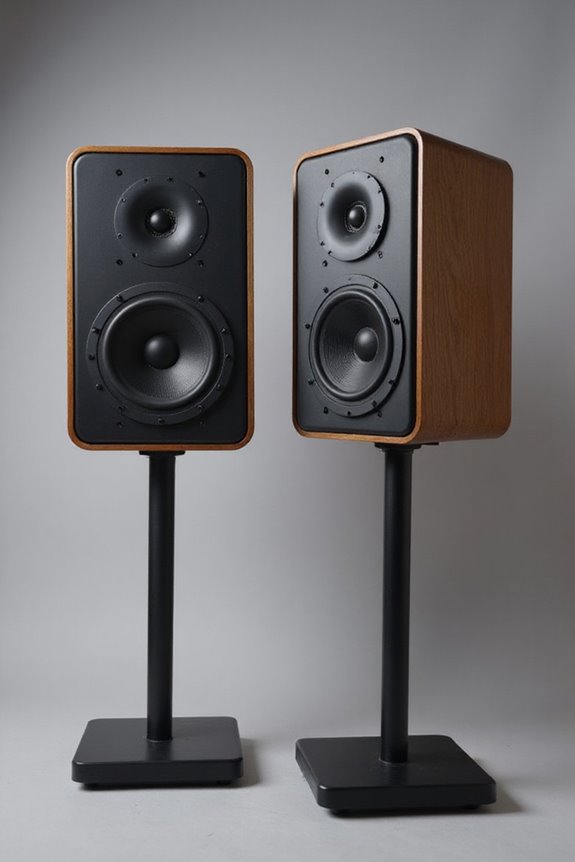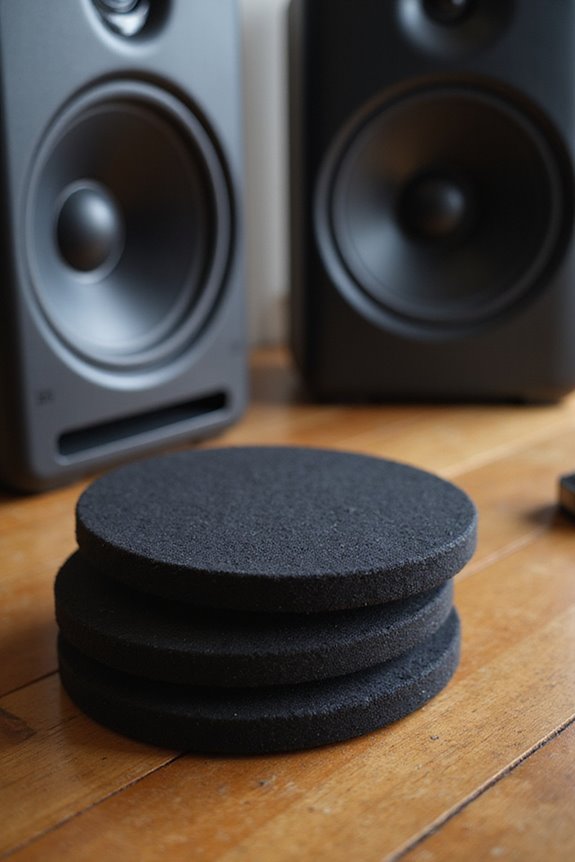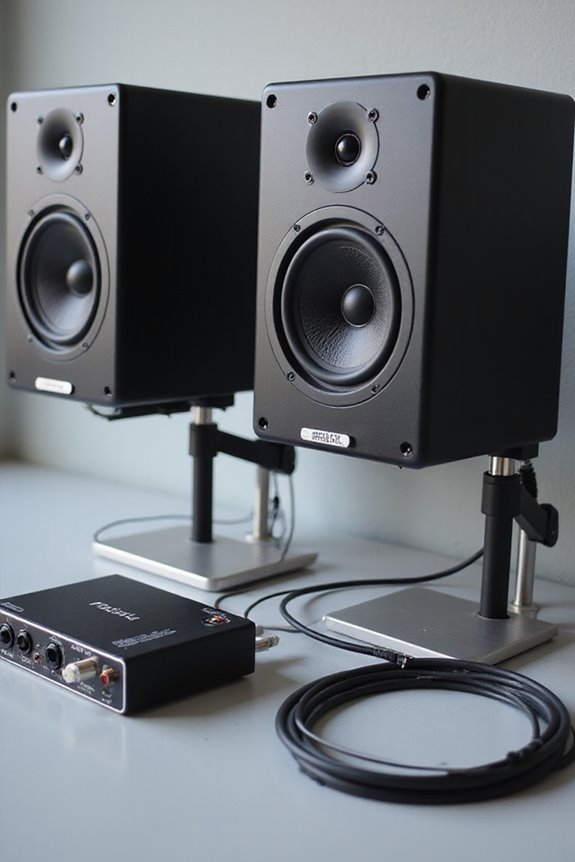
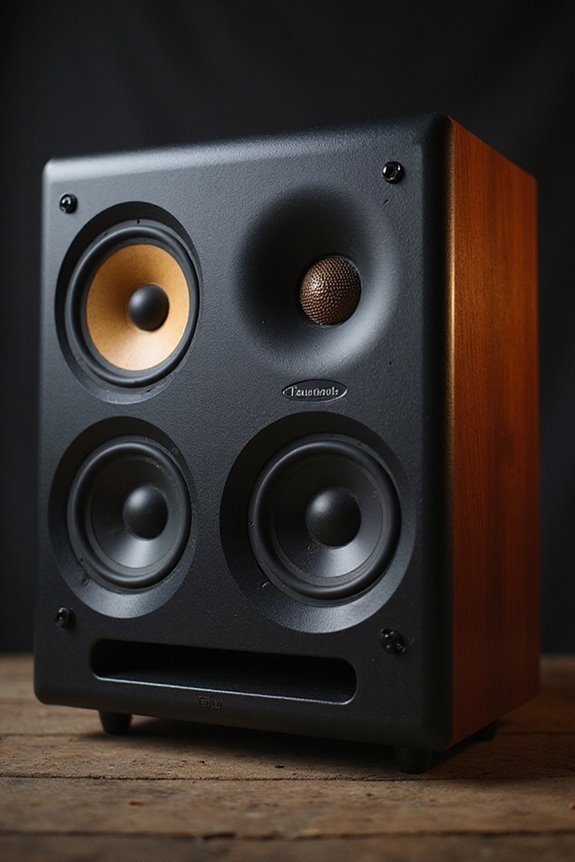

When we’re choosing studio monitors, we often see that professional models cover a frequency range of 35 Hz to 25 kHz, which is essential for accurate sound reproduction. Smaller models typically start at 45 Hz and go up to 21 kHz. Having a flat frequency response is key for mixing clarity, helping us hear every note without any unwanted boosts or cuts. Stick around, and you’ll discover more about how to optimize your studio setup! 🎶
Key Takeaways
- Professional studio monitors typically cover a frequency range of 35 Hz to 25 kHz for accurate sound reproduction.
- Smaller near-field models generally start at 45 Hz and reach up to 21 kHz, suitable for home studios.
- A flat frequency response is crucial for mixing accuracy and prevents translation issues across different playback systems.
- Monitor placement and room acoustics significantly influence frequency range performance and sound quality.
- Ideally, keep studio monitors 0.5 to 3 meters away from walls to minimize sound distortion and enhance clarity.
Understanding Frequency Range Specifications
You may be interested

When it comes to understanding frequency range specifications for studio monitors, we’ve got a lot to unpack! 🎧 The frequency range typically refers to the spread of pitches a monitor can reproduce, which is essential for accurate sound representation. For example, professional studio monitors often cover from 35 Hz to 25 kHz, while smaller near-field models start at 45 Hz and reach up to 21 kHz.
Now, let’s not skip over the specification limits! These limits, such as -3 dB or -6 dB, indicate how much sound output drops off at the edges of the frequency range. A monitor might be rated for a broader range, but without clear limits, you might not get the performance you’re expecting! Choose wisely, friends! 🎶 Additionally, a balanced sound signature is crucial for clarity across high, mid, and low frequencies, which is a key consideration when selecting studio monitor specifications.
Importance of Flat Frequency Response
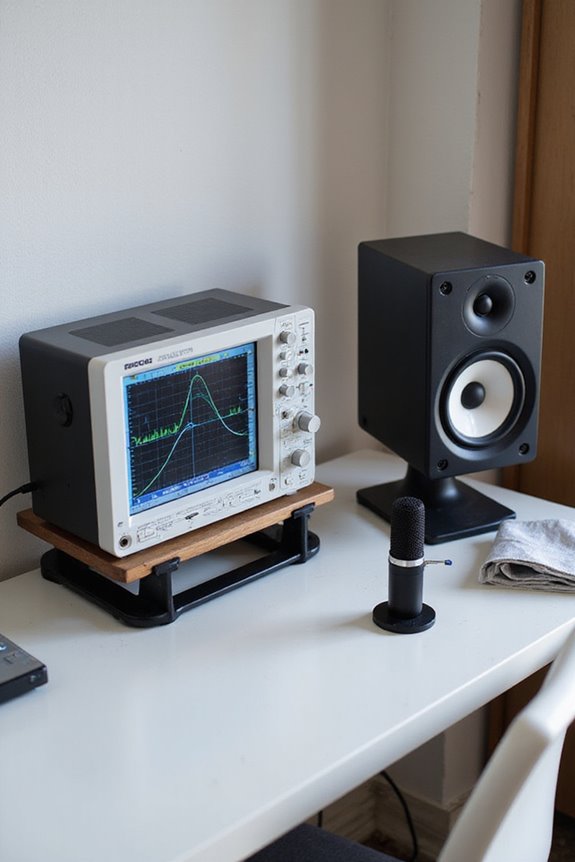
Flat frequency response is essential if we want to achieve an accurate sound in our studio monitors! 🎶 This means that our monitors reproduce all audible frequencies consistently, without artificially boosting or cutting any part of the spectrum. The flat response benefits us by ensuring we hear an uncolored, honest representation of our mixes. When we trust what we hear, it enhances our mixing accuracy, allowing for precise adjustments. If our monitors boost bass or treble, we might misjudge our mixes, leading to translation issues across different playback systems. With a solid flat response, we can create mixes that sound great everywhere! Additionally, wide frequency response is recommended for detailed audio reproduction, further enhancing our monitoring experience. So, let’s embrace the true sound and elevate our music production game together!
Components Influencing Frequency Range
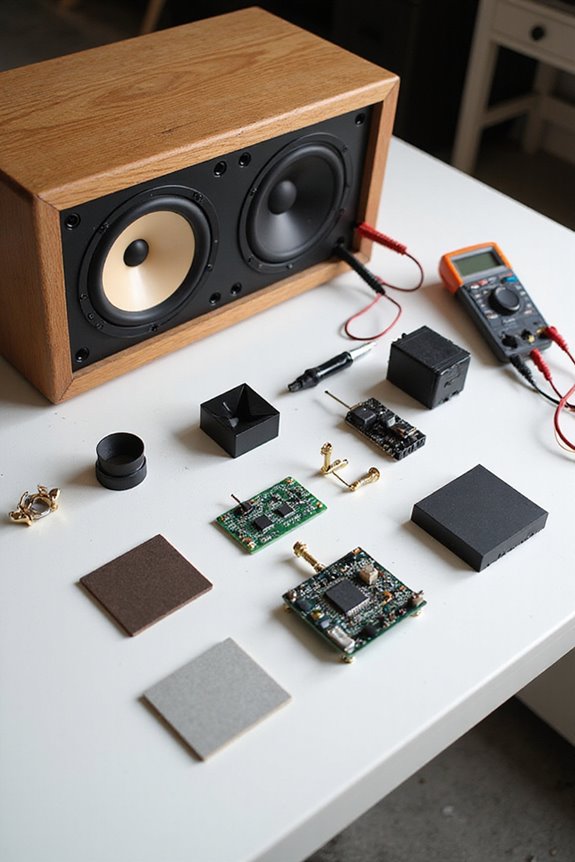
Understanding the various components that influence the frequency range of studio monitors is key to achieving great sound in your music production! 🎧 Each part of the monitor—from the drivers to the enclosure—plays an essential role in how accurately we hear our mixes.
Driver Types: Most monitors are 2-way or 3-way designs, with woofers, tweeters, and sometimes mid-range drivers to cover low, high, and middle frequencies.
Crossover Design: A well-designed crossover guarantees that signals are divided accurately, minimizing distortion.
Amplifier Configuration: Active monitors typically have tailored amplifiers for each driver, guaranteeing efficient power distribution.
Enclosure Materials & Acoustic Treatment**: Quality enclosures reduce resonance and distortion, while internal damping materials improve clarity. Every detail counts! 🎶 Additionally, a proper understanding of room acoustics** can significantly enhance the overall listening experience.
Recommended Products

Sold Individually. Premium JBL Professional driver technology. Low-frequency transducer delivers low-distortion, high SPL, and accurate, tight bass. JBL Pro high-frequency transducer with low-mass annular diaphragm for precise, powerful output. Dual Class-D amplifiers - High Frequency 250W / Low Frequency 250W Integrated bi-amplification system for punchy, powerful, and accurate sound. Patent-pending JBL Image Control Waveguide for accurate control of the sound field and precise imaging.
Bluetooth audio streaming for background music or musical accompaniment

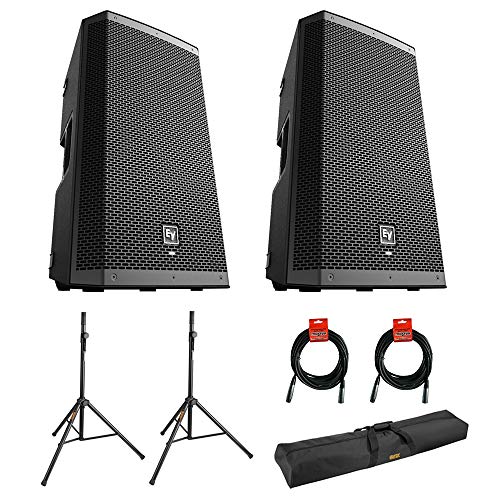
Massive Sonic Impact In A Super-Compact Package: The new larger EVERSE 12 offers a huge 5 dB increase in SPL over EVERSE 8, along with deep bass output to satisfy the most demanding users
Frequency Range and Listening Environment
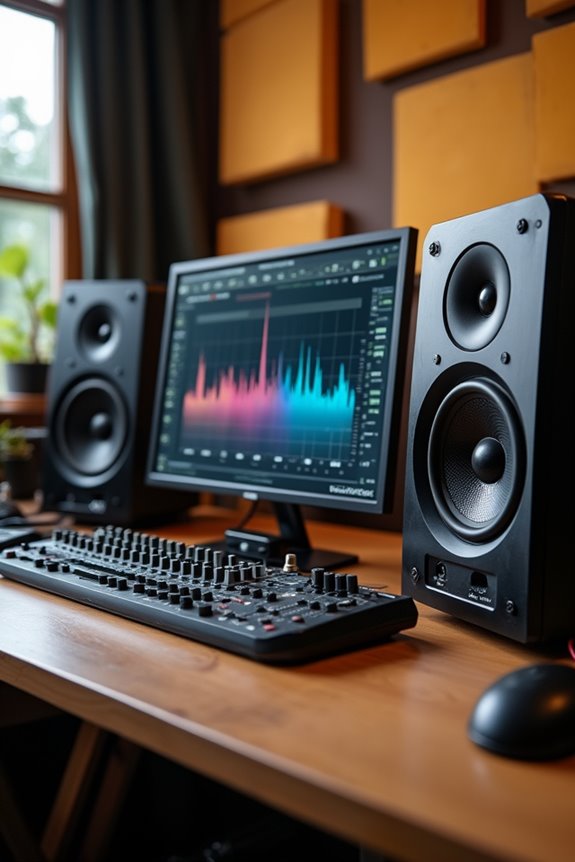
While we might focus a lot on the specs of our studio monitors, their performance is heavily influenced by our listening environment! 🎶 The interplay between the frequency range of our monitors and the room we place them in can make or break our mixes.
Let’s talk room acoustics and monitor placement. If we’re in a small, untreated room, standing waves can distort bass, making it difficult to judge. Positioning monitors too close to walls can also throw off low frequencies. Ideally, we should aim for about 0.5 to 3 meters of space.
For the best results, consider using acoustic panels and bass traps. They flatten the room’s response, ensuring that the true frequency response shines through, leading to better mixes! Additionally, proper speaker placement is crucial to achieving the best sound quality in your environment.
Recommended Products

【High Speed RAM And Enormous Space】64GB DDR5 high-bandwidth RAM to smoothly run multiple applications and browser tabs all at once; 1TB PCIe NVMe M.2 Solid State Drive allows to fast bootup and data transfer
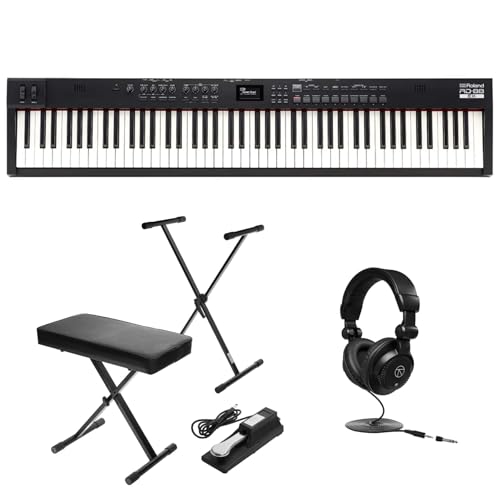
Superior sound quality with SuperNATURAL and ZEN-Core engines

2-way powered loudspeaker with a 2” HF and a 12" LF
Impact of Power and Total Harmonic Distortion (THD)
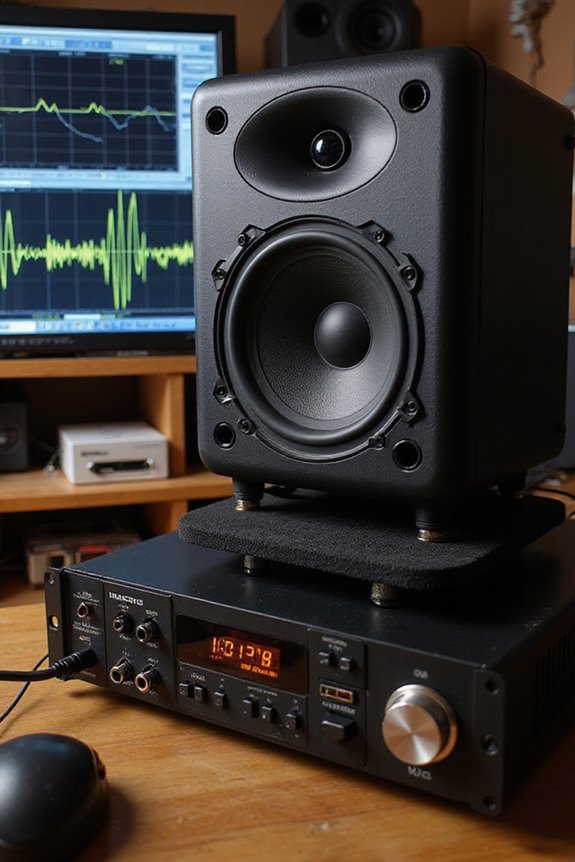
Great room acoustics and monitor placement set the stage for discerning audio quality, but we can’t forget about the role of power and distortion! 🎛 The interaction between amplifier power and Total Harmonic Distortion (THD) greatly impacts how our studio monitors perform, especially when we’re aiming for pristine sound. Proper power matching is key; underpowered amplifiers can cause clipping, leading to unwanted distortion effects. Typically, studio monitors need around 25W for smaller setups, while pro models might exceed 150W. For clarity and reduced distortion, consider bi-amp or tri-amp systems, which dedicate channels to frequency bands. Remember, keeping THD below 1% is essential for accurate sound reproduction. So, let’s make certain our gear is set to deliver the best!
Recommended Products

24-bit/192kHz USB Audio/MIDI Interface with 4 Mic/Instrument Preamps
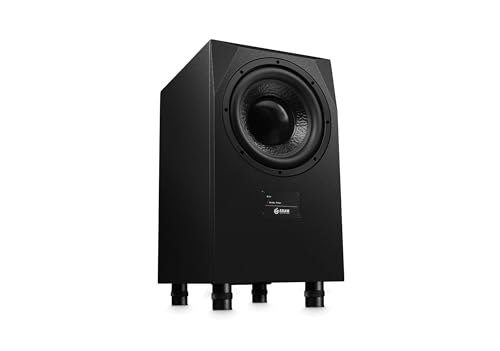

+19 / +4 dBu switch on the bottom adds a direct way to reduce the output level, thus improves SNR for sensitive active monitors, avoids distortion / overload, and helps to keep TotalMix FX faders near 0 dB instead of high attenuations.
Frequently Asked Questions
How Do I Choose the Right Monitor Size for My Space?
When we’re choosing the right monitor size for our space, we should consider room acoustics and monitor placement. Smaller monitors work better in tight areas, while larger ones thrive in spacious environments for accurate sound.
Can I Use Studio Monitors for Casual Listening?
Think of studio monitors as a finely-tuned instrument; while they excel in accuracy, they’re a bit plain for casual listening. We can enjoy them, but let’s remember their true calling is for professional sound.
What Types of Music Require Specific Frequency Response?
When diving into music genres, we’ve noticed bass-heavy tracks thrive on low frequencies, while acoustic clarity shines in the midrange. Balancing these elements helps us create mixes that resonate with everyone in our community.
How Often Should I Calibrate My Studio Monitors?
When we think about our monitors’ performance, regular monitor calibration and frequency adjustments are essential. Let’s commit to monthly checks for critical mixes or quarterly for more relaxed settings, ensuring we all achieve consistent sound excellence together.
Do Monitor Stands Affect Sound Quality?
Absolutely, we’ve found that monitor placement on stands greatly enhances sound quality. With proper acoustic treatment, we can eliminate unwanted vibrations and improve bass clarity, leading to a more accurate and enjoyable listening experience together.