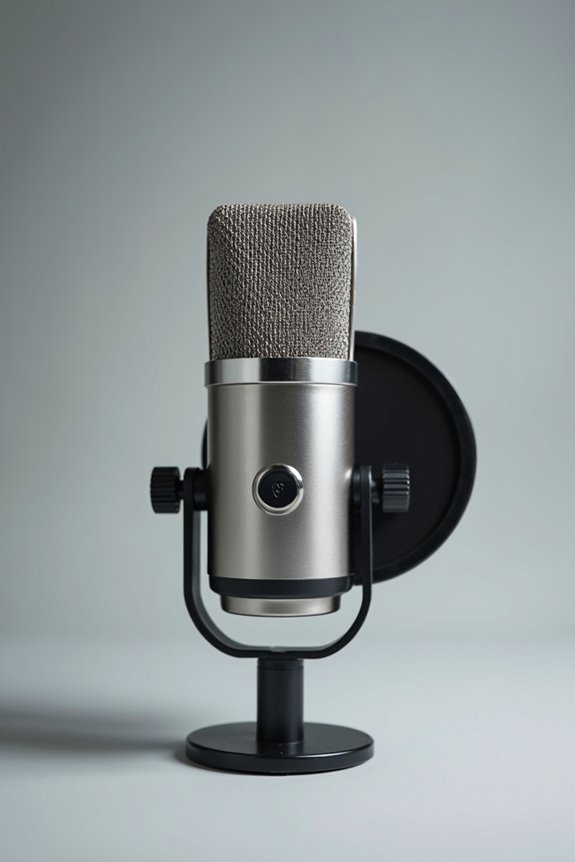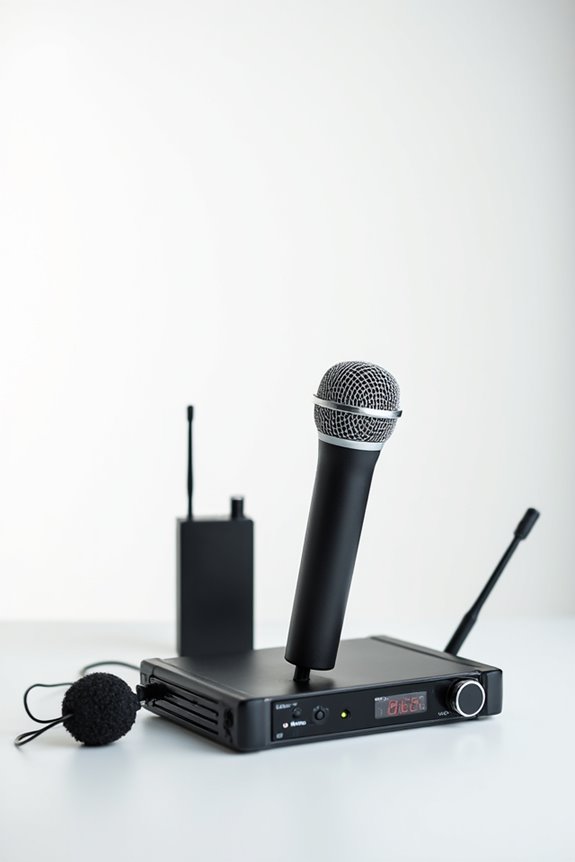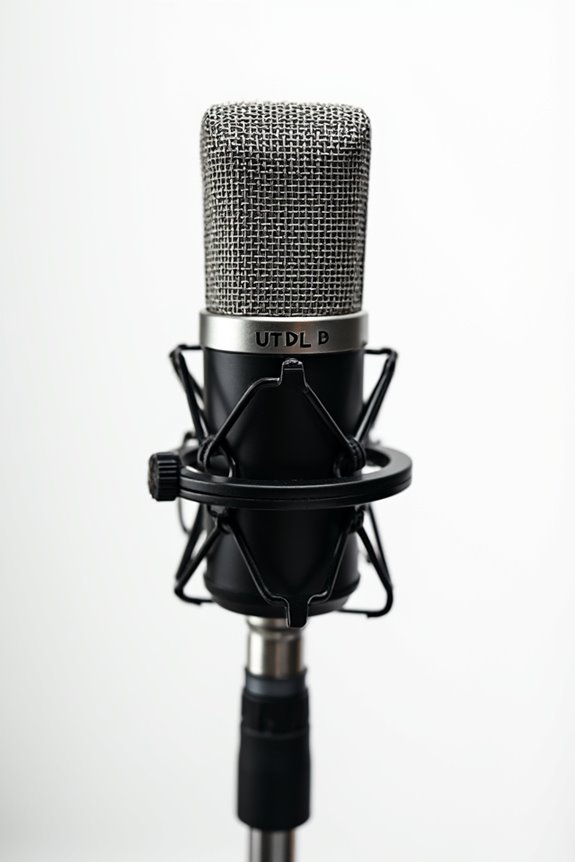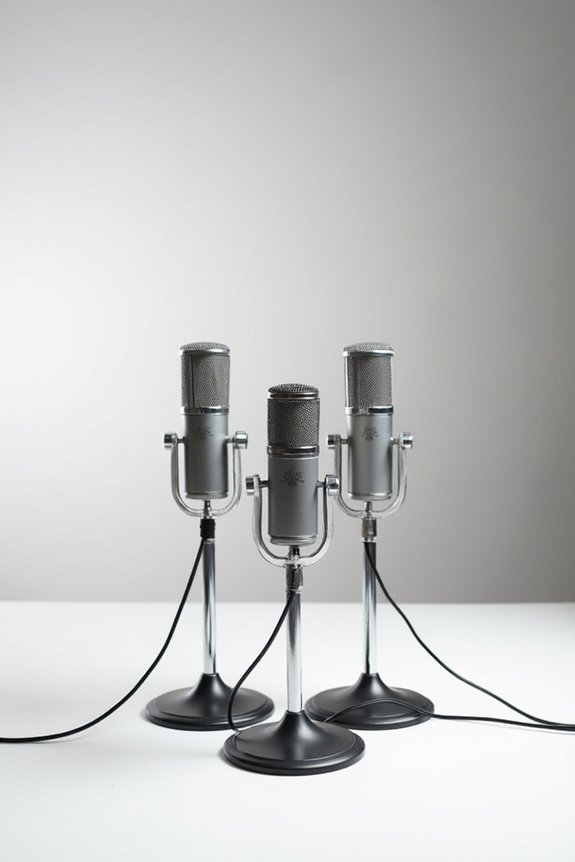
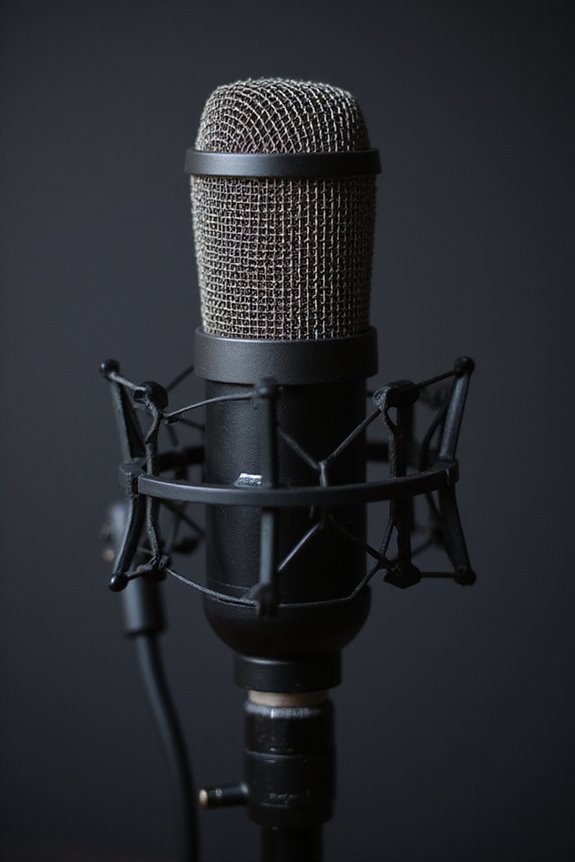

If you’re looking for the best budget studio microphone, you can’t go wrong with the Audio-Technica AT2020! It’s a large diaphragm condenser that’s perfect for vocals, offering excellent clarity and warmth. Plus, there’s the Shure SM58, a dynamic mic great for live performances. Both are reliable, affordable options under $200! 🎤 With USB options like the Audio-Technica AT2005USB, you’ve got flexibility too. Stick around, you’ll discover more fantastic mic options and tips soon!
Key Takeaways
- The Audio-Technica AT2020 is a great entry-level large diaphragm condenser microphone for capturing vocals and instruments with clarity.
- The Shure SM58 is a versatile dynamic microphone praised for its durability and performance in both live and studio settings.
- USB microphones like the Blue Snowball provide easy plug-and-play options, ideal for podcasting and home recording without needing additional equipment.
- The MA67 offers smooth mid-range and crisp highs, making it suitable for vocals and a popular choice among budget studio mics.
- Consider features like phantom power needs and connectivity options (USB vs. XLR) to match your recording requirements and setup.
Overview of Budget Studio Microphones
You may be interested
When we explore the world of budget studio microphones, we uncover a treasure trove of options that fit various needs without breaking the bank. 🎤 We all want great sound quality, right?
First, let’s consider our microphone types. Dynamic microphones are robust and perfect for loud environments. Small diaphragm condensers deliver neutral sound, ideal for delicate instruments. If we crave warmth for vocals, large diaphragm condensers might be the best choice. Finally, USB microphones simplify our lives with direct computer connections—perfect for podcasting!
Each type balances performance with affordability. Brands like Shure and Sennheiser offer reliability, while models like the Audio-Technica AT2005USB provide versatility. Whatever we pick, we can enjoy solid sound quality without stretching our wallets too far! Additionally, microphones with a frequency response of 50 Hz to 15 kHz are essential for capturing optimal vocal tones. Let’s find our perfect match together!
Performance Characteristics of Popular Models
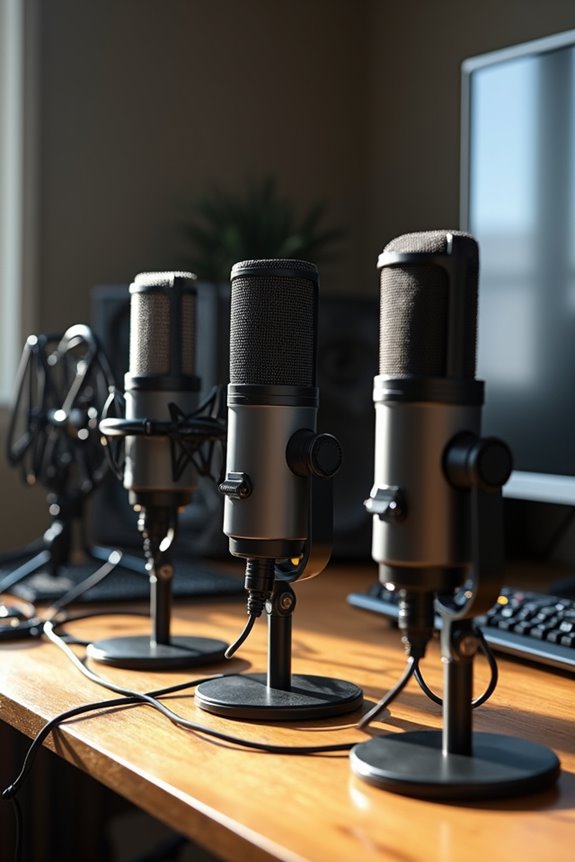
Now that we’ve explored the diverse options in budget studio microphones, it’s time to take a closer look at the performance characteristics of popular models! 🎤 Each microphone has unique features that cater to different recording needs, so understanding these specifics can help you find the right fit.
The MA67 delivers a soothing sound profile, blending a smooth mid-range with crisp highs, while budget dynamics like Shure SM58 span 40Hz to 16kHz—a decent range for vocals. The Neumann TLM 102 astounds with its incredible 144dB SPL handling, perfect for drums! Its low self-noise enhances sound quality for delicate sources. Budget condensers, like the MXL 990, excel at capturing natural tones, making them fantastic for vocals and instruments. Don’t underestimate the Editors Keys SL600, which includes handy features to optimize your recording experience! Additionally, selecting microphones with a high signal-to-noise ratio can significantly improve your overall sound clarity by isolating the desired audio from background noise.
Recommended Products
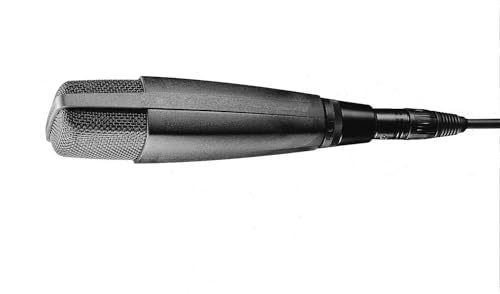
Rugged professional microphone

SMOOTH AUDIO REPRODUCTION - The SM4 microphone features a brass 1-inch dual-diaphragm capsule, providing clean, controlled low-end frequencies and smooth, detailed highs for natural audio reproduction.

Great for all kinds of indoor outdoor activity, such as party, church, speech, weeding, family get-together, etc; FCC certification and comply with new FCC rules.
Connectivity Options and Compatibility
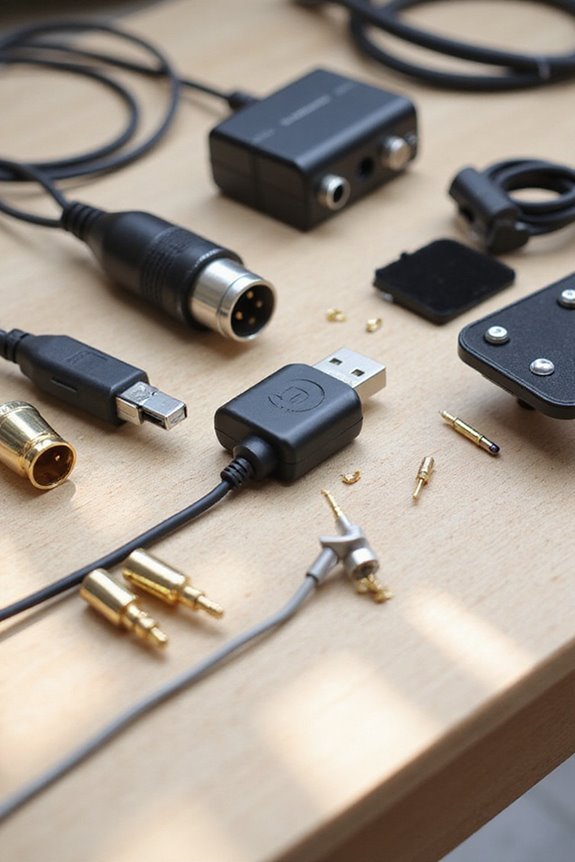
There are several essential connectivity options to evaluate when selecting a budget studio microphone! 🎤 Whether you’re setting up a home studio or recording on the go, understanding these options can greatly influence your experience.
USB Advantages
USB mics are super convenient, connecting directly to computers without needing extra gear. Perfect for mobile compatibility, they often work with devices like iPhones, too!
XLR Benefits
XLR mics offer professional sound quality and flexibility, though they do need an audio interface. They’re best for studio setups.
Hybrid Options
Some mics, like the NT1 5th Generation, combine both USB and XLR, giving you versatility!
Wireless Flexibility
Wireless models like the Hollyland Lark M2 enhance portability, letting you capture high-quality audio without cords! Additionally, using a high-quality audio interface can significantly improve your recording experience by providing better sound fidelity and lower latency.
Recommended Products

This product is sourced from an authorized Soundcraft North American dealer and includes the official Soundcraft manufacturer’s warranty. The warranty is valid only for products purchased from authorized Soundcraft North American dealers within the United States.
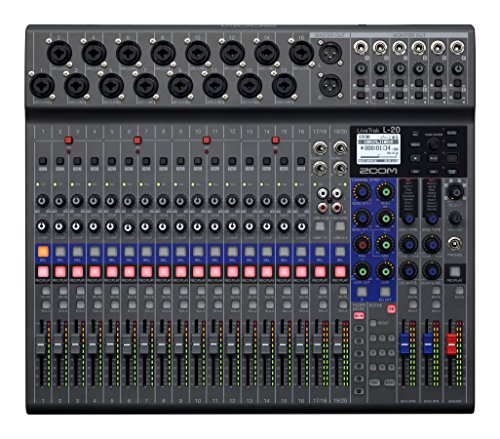
TWENTY CHANNELS FOR YOUR BIGGEST SHOWS – Simultaneously records 22 tracks at 24-bit/96kHz directly to SD card, making it the ultimate solution for large band recordings, live shows, and professional productions.

Powerful Guitar FX, Amp Modeler, and Vocal Processor - Featuring a 7" touchscreen with a huge library of realistic and responsive guitar, bass and vocal FX, amp and cab models, and IR loading
Price Point Analysis and Value Proposition
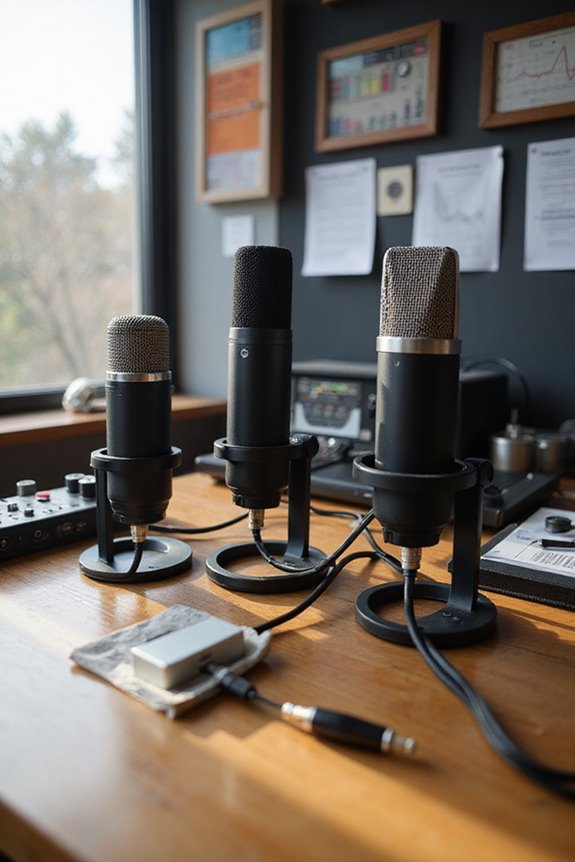
Finding the right budget studio microphone can feel overwhelming at times, but don’t worry—we’ve got your back! 🎤 Price point matters, as it dictates not just what you pay upfront, but the sound quality and durability you can expect.
In the $30 to $100 range, we find solid entry-level options like the Audio-Technica AT2020 that deliver surprising quality. The $100 to $200 range offers mics like the Shure SM58, known for durability and versatility. It’s essential to take into account potential price fluctuations and the quality trade-offs you might encounter. Some budget mics under $50 may lack longevity, while those around $150 to $200 balance sound quality and plug-and-play ease—making them a smart investment for our budding studios! 🎶
Recommended Products

Requires +48V phantom power

Matched Pair Studio Grade Professional Large Diaphragm Vocal and Instrument Condenser Microphone with Rugged Aluminum Carrying Case. XLR Connector. Astounding sound quality for lead vocals and solo instruments

CANON USA AUTHORIZED - INCLUDES FULL USA WARRANTY | Pursue Imaging Excellence - The Canon EOS R5 Full Frame Mirrorless Camera features an all-new 45 MP CMOS sensor, 8K DCI video, Dual Pixel CMOS AF II, in-body image stabilization and more, the EOS R5 offers incredible imaging performance for portraits, landscapes, wildlife, cinematography and everything in between.
Use Cases for Different Microphone Types
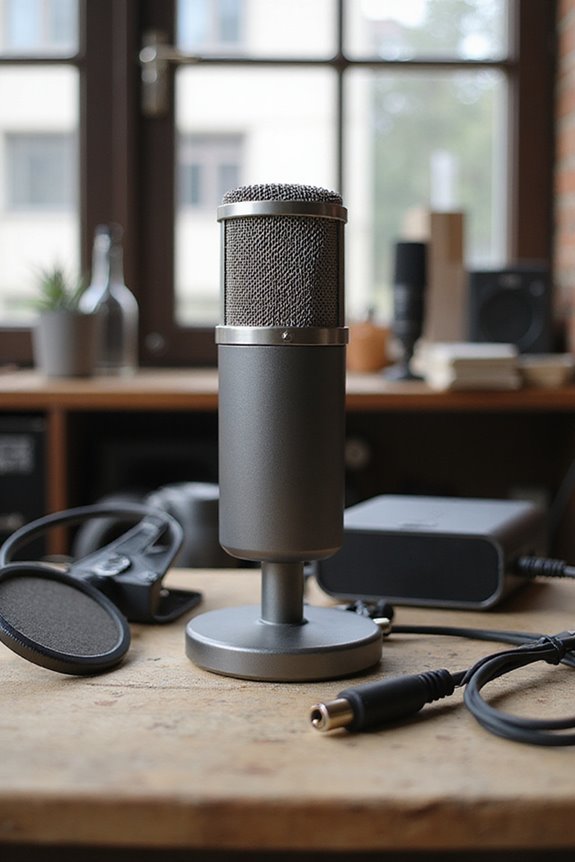
When it comes to choosing the right microphone, understanding the use cases for different types can elevate your recording game! 🎙 Each microphone type has its strengths tailored to specific applications, and knowing these can save you time and help you sound your best.
Condenser Microphones are perfect for studio recordings, capturing vocals and instruments with precision. Their large-diaphragm versions excel for vocals, while small-diaphragm types are great for detailed instruments. Additionally, condenser microphones typically require phantom power to operate, which is an important consideration for compatibility with your recording setup.
Dynamic Microphones shine in live settings, easily handling loud sounds. They’re ideal for podcasting too!
Ribbon Microphones offer a smooth, warm sound for brass and vintage tones.
Additional Features to Consider
While you might be fixated on sound quality and price, we can’t overlook the additional features that make a microphone truly shine! Let’s talk built-in DSP and user-friendly controls. Features like auto-level control help reduce clipping, ensuring cleaner audio captures. With multiple tone presets, you can quickly adapt your sound without breaking a sweat.
We also have handy components like high-pass filters and bass cut switches to keep unwanted noise at bay! Additionally, look for microphones with phantom power capability to ensure compatibility with professional-grade mics for enhanced clarity and detail.
And don’t forget versatility; USB and XLR combo ports make connection a breeze. Whether you’re in a studio or on the go, these microphones are designed for durability and comfort. With these thoughtful features, we can elevate our recordings to new heights!
Comparing Dynamic and Condenser Microphones
Have you ever wondered what sets dynamic and condenser microphones apart? Well, we’re here to break it down! Dynamic microphones shine with their ruggedness. They can handle loud sounds like a champ, making them ideal for live performances and untreated rooms. Those dynamic advantages make them a favorite for many of us!
On the other hand, condenser microphones boast impressive condenser sensitivity. They capture nuances and are perfect for studio environments where every detail matters. But remember, they’re a bit more delicate, requiring care and sometimes phantom power. Additionally, high-quality XLR microphones typically feature a frequency response range of 50 Hz to 20 kHz, ensuring they capture sound accurately and clearly.
Recommended Products

Microphones that have been the highest standard for studios around the world for 50 years


Circuit topology Four dual triode vacuum tubes (Sovtek 6922), high-voltage discrete Class A
Recommendations for Specific Needs
Whether you’re diving into podcasting, gaming, or capturing those sweet studio vocals, finding the right microphone that suits your specific needs without breaking the bank can feel like searching for a needle in a haystack! Here are some suggestions for different microphone types:
For Podcasting
- Audio-Technica AT2040USB: Great quality under $200!
- Amazon Basics USB Mic: Amazing for those on an ultra-tight budget, under $30!
For Studio Vocals
- MXT-201: Versatile and sounds way better than it costs!
- Audio-Technica AT2020: A reliable choice for just around $100!
For Gaming
- Shure MV6: Perfect for noise reduction, around $149!
- NZXT Capsule Elite: Rich audio under $100!
With these options, you’ll find a mic that’s just right for you! 🎤
Recommended Products

Designed for maximum versatility making it perfect for live sound, home recording, content creation, and live streaming.

Large 24.2MP APS-C Exmor CMOS Sensor and fast BIONZ X processor

20-Channel mixer with USB and SPX digital effects
Final Thoughts on Budget Microphones
As we wrap up our exploration of budget microphones, it’s clear that they can be real game-changers for those just starting in audio. With affordability factors at the forefront, choosing the right mic isn’t just about price—it’s about performance too!
When checking user reviews, you’ll see that many budget models, like the Shure SM58 or Audio-Technica ATR2500, provide solid sound for your needs, whether for home recording or live performances. Remember, dynamic microphones typically offer greater durability, while USB options make setup a breeze! Just keep in mind that some trade-offs exist, such as sensitivity and frequency response. But hey, for beginners on a budget, these mics can offer an amazing entry point! 🎤✨
Frequently Asked Questions
How Do I Choose Between a Dynamic and Condenser Mic?
When we think about choosing between dynamic vs condenser mics, we should consider sound characteristics first. Dynamic mics shine in loud settings, while condensers excel in capturing detail. Let’s explore how these nuances fit our needs together.
What Microphone Accessories Should I Consider Purchasing?
When we’re setting up our recording space, we should definitely consider essentials like pop filters and shock mounts. They enhance our sound quality, reduce noise, and ultimately help us feel more professional in our audio projects.
How Can I Improve Sound Quality When Using a Budget Mic?
To elevate our sound quality with a budget mic, let’s explore soundproofing techniques and perfect our mic placement. Together, we can truly create a rich and professional sound that speaks to our unique artistry.
Are There Any Maintenance Tips for Budget Microphones?
When it comes to microphone care, we’ve found some great cleaning tips! Regularly wipe the grille, avoid moisture, and use protective cases. These simple practices can really enhance our microphone’s longevity and performance.
What Environments Are Budget Microphones Suitable For?
When we talk about budget microphones, they shine in cozy home studios and for portable recording. They’re perfect for capturing those warm, intimate moments, whether we’re podcasting, streaming, or serenading the world in silence.