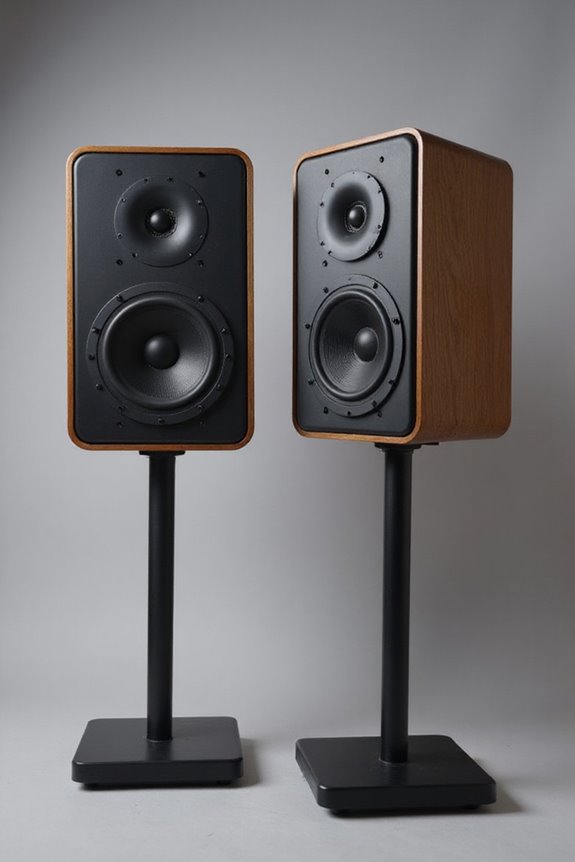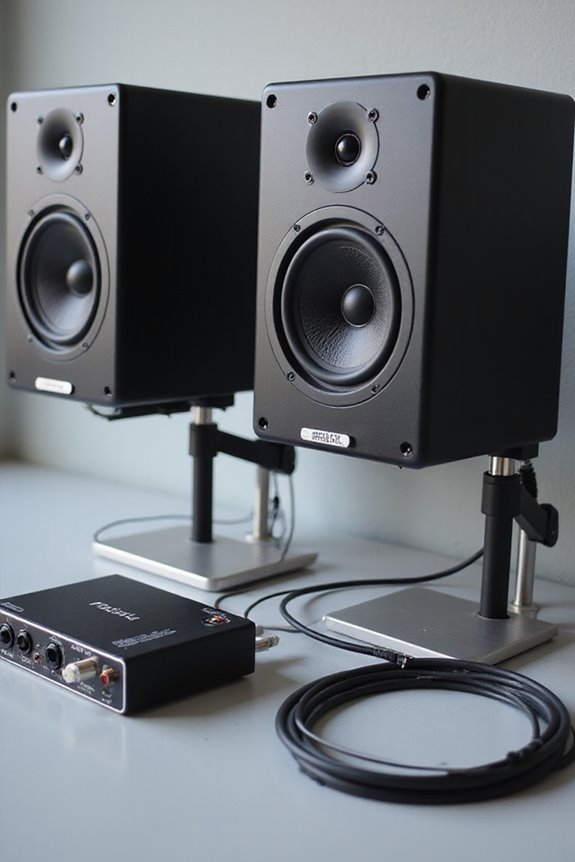


Using studio monitors for mixing is essential for achieving great sound! 🎶 They provide an accurate sound representation, ensuring we hear every detail without unwanted coloration. With flat frequency response, monitors help us make better mixing decisions and create balanced mixes that translate well across all systems. Plus, they reduce ear fatigue since they don’t blare harsh frequencies. Trust us, your ears will thank you! Stick with us, and we’ll explore more benefits you’ll love!
Key Takeaways
- Studio monitors provide a flat frequency response, ensuring uncolored sound for accurate audio evaluation during mixing.
- They reveal mix elements with precision, highlighting critical instruments and preventing imbalances in the mix.
- High-quality studio monitors reduce ear fatigue, allowing for longer mixing sessions with moderate listening volume.
- Room calibration features help create a controlled acoustic environment, ensuring mixes translate well across different playback systems.
- Consistent sound quality in well-defined sweet spots enhances collaboration and decision-making during the mixing process.
Accurate Sound Representation
You may be interested
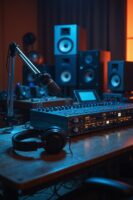
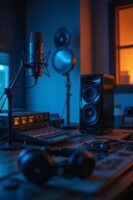
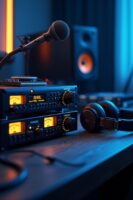
When it comes to mixing music, having accurate sound representation is key, and that’s where studio monitors come in! 🎶 Unlike regular speakers, studio monitors are designed with a flat frequency response, which means they don’t boost or cut any particular range of sound—be it bass, midrange, or treble. This frequency accuracy helps us hear the audio just as it was recorded, avoiding any unexpected surprises later.
Using monitors guarantees we get that uncolored, detailed sound reproduction, allowing us to detect subtle nuances that other speakers might mask. When we rely on studio monitors, we can make better mixing decisions, leading to more polished results. Investing in accurate sound fidelity is what truly elevates our music! 🎧 Additionally, features like acoustic tuning controls on monitors enhance their versatility in different environments.
Recommended Products

ASUS VivoBook Pro 16 OLED laptop comes with 16” 3.2K (3200 x 2000) OLED 16:10 aspect ratio with ultra-slim NanoEdge bezels
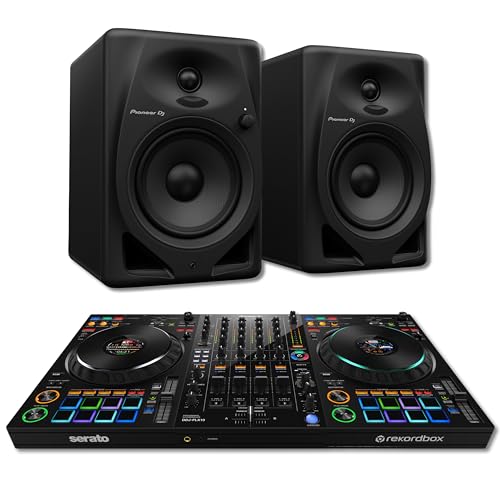
WHAT'S INCLUDED: Pioneer DDJ-FLX10 4-deck Rekordbox and Serato DJ Pro controller and Pioneer DM-50D powered nearfield desktop monitor speakers — a complete professional DJ studio setup with accurate reference monitoring from a matched-brand Pioneer signal chain.

3-way Powered Studio Monitor with 8" LF Driver
Enhanced Mixing Precision and Clarity
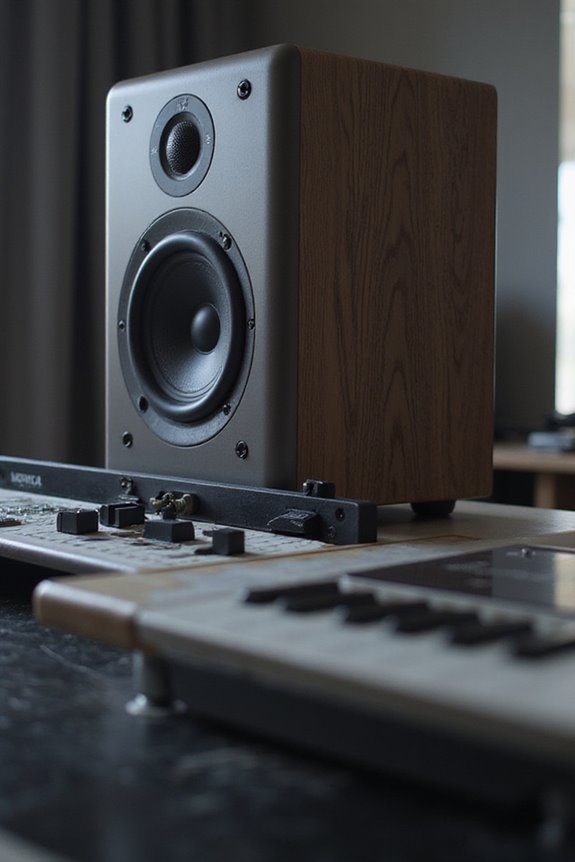
To achieve enhanced mixing precision and clarity, we need to recognize that studio monitors are like the sharp-eyed detectives of our audio world! 🕵♂ Their detailed frequency response accuracy reveals every mix element without bias, ensuring we don’t accidentally drown out vocals in a sea of bass! With a mid-range focus that highlights critical instruments, we can quickly spot imbalances. Plus, accurate stereo imaging lets us precisely place sounds in the stereo field, creating a more immersive listening experience. The well-defined sweet spots of studio monitors mean you and your collaborators can enjoy consistent sound quality. No more mixing woes! Together, we can create balanced, dynamic mixes that resonate, ensuring they sound fantastic everywhere! 🎶 Additionally, the excellent frequency response of studio monitors enhances our ability to fine-tune every element of the mix to perfection.
Recommended Products

INCLUDED - Behringer WING Compact 48-Channel 28-Bus Full Stereo Digital Mixing Console, Power Cord, Adorama 1-Year Limited Warranty, and SKB iSeries Case.

Optimized closed-back design with 53mm transducers for greatest-in-class headroom and dynamic range

Portable, rack-mountable, and flexible 40-channel digital console available with 26 mix buses, integrated recording, advanced audio networking, and a complete professional software suite.
Reduced Ear Fatigue and Listening Discomfort
Reducing ear fatigue and listening discomfort is essential for anyone serious about mixing audio! 🎧 While we might think crankin’ up the volume brings us closer to that perfect sound, it can actually do more harm than good. Sticking to a moderate listening volume (below 80-90 dB SPL) helps minimize auditory strain, keeping our ears happy and healthy. Plus, using high-quality studio monitors guarantees sound quality without harsh frequencies that tire us out. Don’t forget to take frequent breaks! Every 45-50 minutes, a 10-15 minute pause lets our ears recover. Regularly calibrating our monitoring setup keeps everything sounding consistent, so we can focus on creating the best mix possible without all the discomfort. Additionally, investing in an audio interface with high-resolution recordings can enhance overall sound quality. Let’s keep our ears smiling!
Realistic Playback Environment Simulation
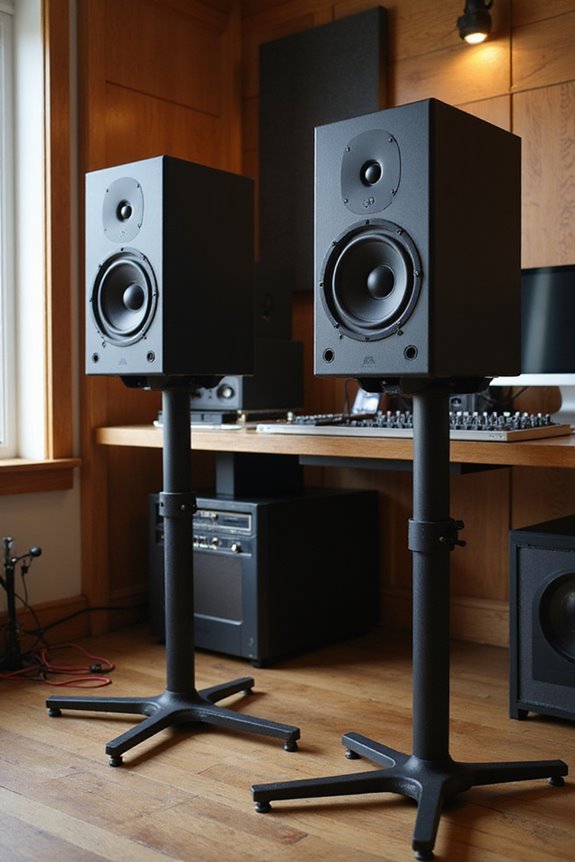
After taking care of ear fatigue, let’s talk about something equally important: simulating realistic playback environments. With studio monitors featuring room calibration, we create a controlled acoustic space that mirrors real-world listening scenarios! 🎶 This isn’t just tech jargon; it means we can accurately assess sound characteristics without room interference.
Using virtual monitoring, we can replicate different acoustic environments, catching mix issues often masked in untreated spaces. This calibration helps us avoid the dreaded “mix-sound surprise” when listeners play our tracks elsewhere. 🎧 Plus, it guarantees our mixes translate well across various playback systems, from earbuds to soundbars! So, by simulating these environments, we gain clarity and balance in our mixes, making every decision count. Furthermore, investing in high-quality studio monitors ensures that our audio reproduction remains true to the original sound. Let’s get mixing!
Recommended Products

🚀 Revolutionary Dual OS Architecture | Professional-Grade Performance ✓ Android 13 Smart Collaboration Platform 8GB RAM + 128GB ROM for seamless multitasking across 10+ apps, preloaded with Google Workspace & 5,000+ EDU tools Zero-Gap Optical Bonding display (320cd/m² brightness + 178° wide viewing angle), crystal-clear visibility in bright environments ✓ Windows 11 Pro Workstation Power Intel i7-9750H Processor | 16GB DDR4 | 512GB SSD for CAD/PS/4K video editing TPM 2.0 encryption + GDPR compliance for enterprise-level data security

PRECISE: Conforms to ANSI S1.40-1984 and IEC942 1988 Class 2 standards, ensuring accurate calibration.

Reference-Class Performance
Objective Reference for Mix Translation
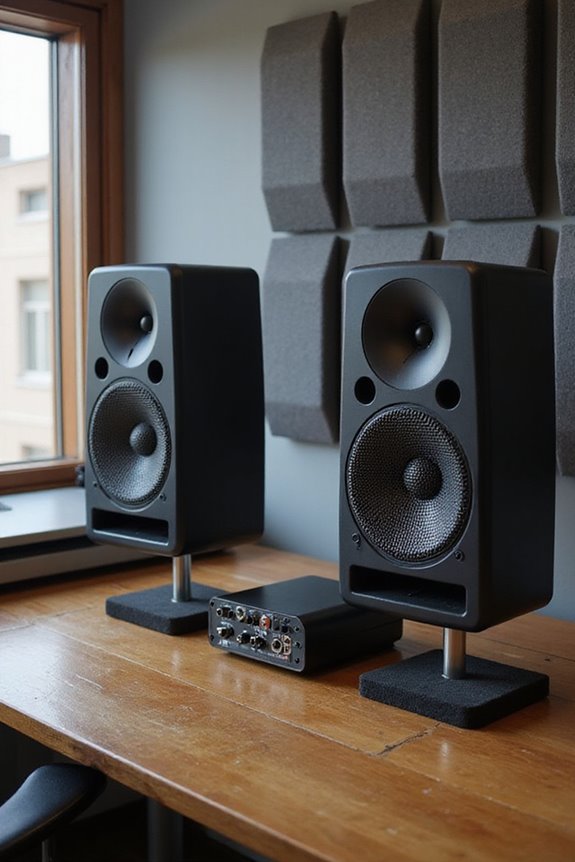
When it comes to mixing, having an objective reference for mix translation is essential! Studio monitors provide the accurate frequency balance we need to assess our mixes effectively. Unlike consumer speakers, which boost bass and treble, monitors allow us to hear every detail without any coloration. This clarity helps us achieve sound consistency across various playback systems. Choosing monitors with flat frequency response is crucial for ensuring accurate audio reproduction.
Recommended Products
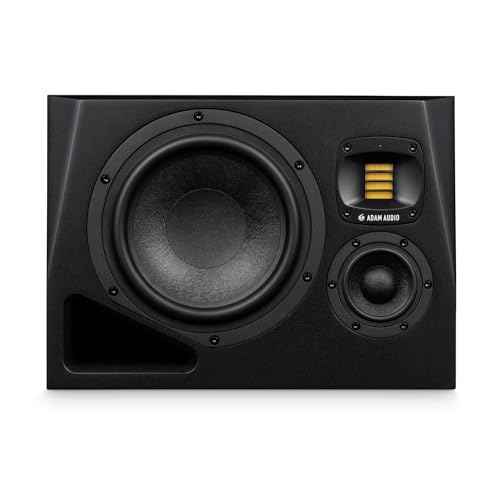
3-way Powered Studio Monitor with 8" LF Driver

This product is sourced from an authorized Soundcraft North American dealer and includes the official Soundcraft manufacturer’s warranty. The warranty is valid only for products purchased from authorized Soundcraft North American dealers within the United States.

EXCEPTIONAL SOUND PERFORMANCE - Savor the ultimate listening experience by pairing a fully loaded high fidelity turntable with endlessly versatile, room-filling 120-watt powered bookshelf speakers
Frequently Asked Questions
What Is the Difference Between Near-Field and Far-Field Studio Monitors?
When we explore the difference between near-field and far-field studio monitors, we’re looking at how active monitors provide direct sound and spatial clarity, while passive monitors rely more on room acoustics for a broader sound experience.
How Do I Properly Position My Studio Monitors?
When we talk about monitor placement, it’s essential to avoid sound reflection issues. Let’s form that equilateral triangle, guarantee tweeters are at ear level, and maintain proper distance from walls for the best listening experience.
Can I Use Studio Monitors Without Acoustic Treatment?
Sure, we can use studio monitors without acoustic treatment, but it’s like trying to mix in a windstorm! Proper monitor placement helps, but sound clarity suffers, making it tougher to achieve professional results we all aspire to.
Are Studio Monitors Necessary for Electronic Music Production?
Absolutely, we believe studio monitors are essential for electronic music production. Their benefits provide mixing accuracy, ensuring we hear every detail. Together, we can create mixes that translate well across various playback systems, unifying our sound.
How Do I Choose the Right Studio Monitors for My Needs?
Did you know choosing the right monitors can impact our mixes by up to 50%? We should consider monitor specifications alongside room size to guarantee a perfect blend of sound and space in our setup.