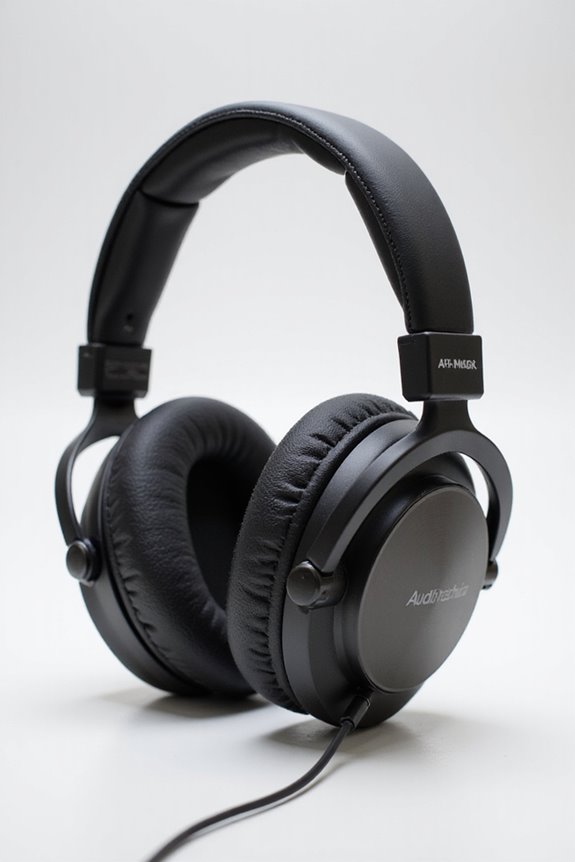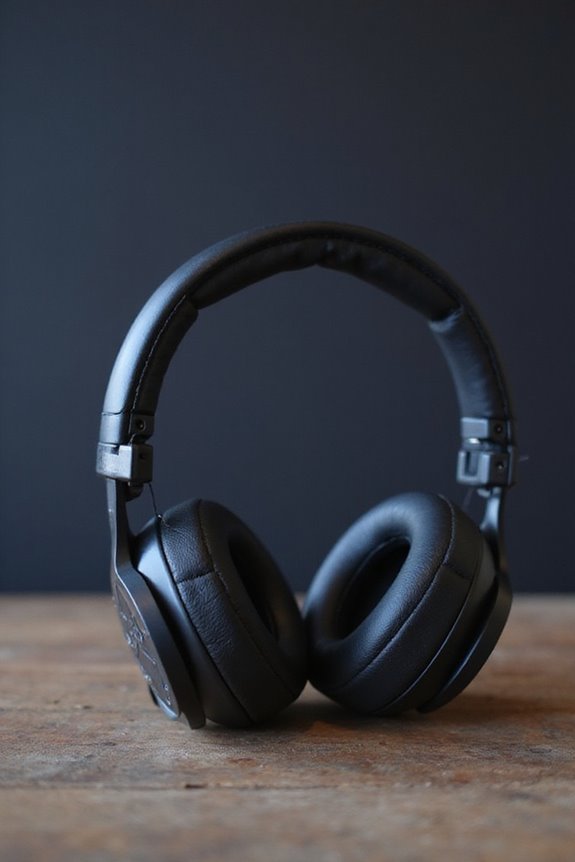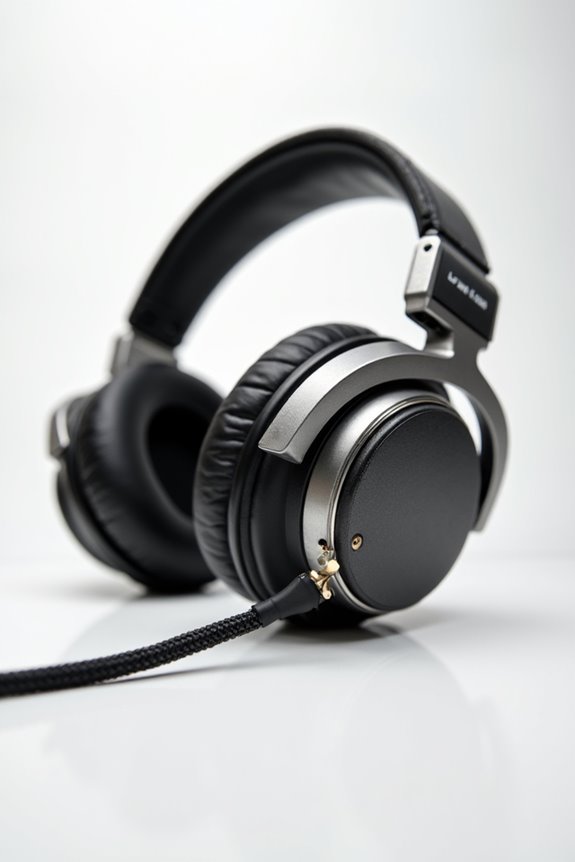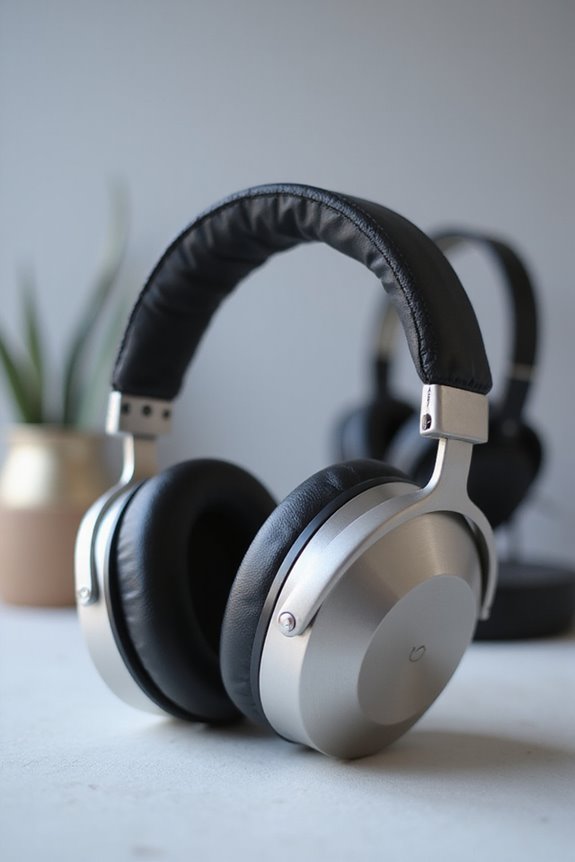
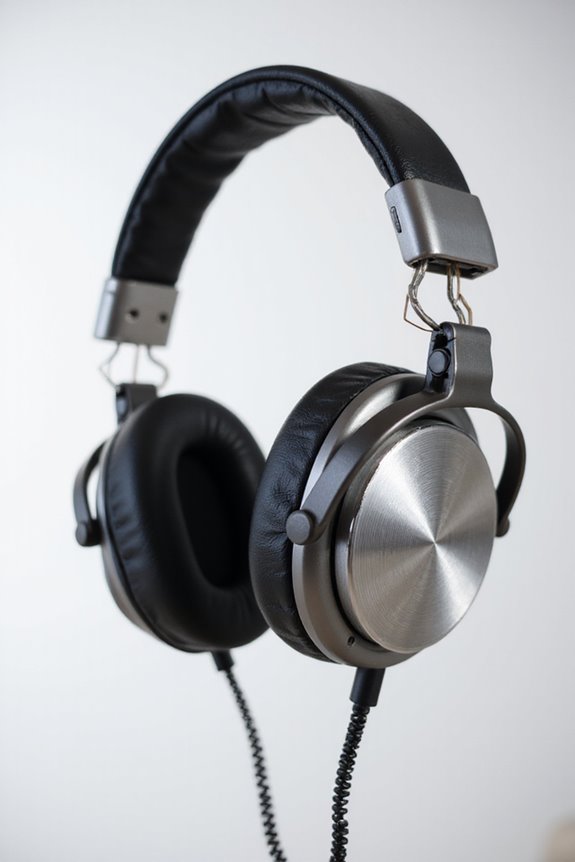

When we talk about studio headphones, we’re referring to specialized gear for audio pros! 🎧 These headphones deliver sound accuracy, with a frequency response of 20 Hz to 20 kHz and an impedance of 60 ohms or higher. They often feature durable construction and large ear cups for comfort and isolation! There are closed, open, and semi-open options tailored to different audio tasks. Interested in finding the perfect pair for your needs? Stick around for more insights!
Key Takeaways
- Studio headphones are designed for professional audio use, offering a neutral listening experience ideal for monitoring and mixing music.
- They typically feature a flat frequency response, ensuring accurate sound representation and preserving subtle audio details.
- Constructed with durable materials, studio headphones are built for longevity and can withstand long recording sessions.
- Types include closed-back for sound isolation during tracking and open-back for a natural soundstage during mixing.
- They generally have higher impedance and sensitivity levels, contributing to enhanced sound quality during playback and recording.
Definition and Purpose of Studio Headphones
You may be interested
When we talk about studio headphones, we’re stepping into the world of professional audio—where accuracy matters! 🎧 Studio headphones are specifically designed for use in recording studios, making them essential tools for sound engineers, producers, and musicians. These headphones excel in sound accuracy, giving us that neutral listening experience needed to monitor recordings effectively.
Their primary purpose? To guarantee we hear exactly what’s being captured, so we can pinpoint any audio issues using proper monitoring techniques. They offer a flat frequency response, meaning those subtle details won’t get lost in the mix! Plus, with their solid design and durability, they’re built for long sessions, making them an invaluable part of our audio gear. Let’s embrace the power of clarity together! Additionally, high-quality drivers are crucial for achieving excellent sound clarity in studio headphones.
Key Technical Specifications
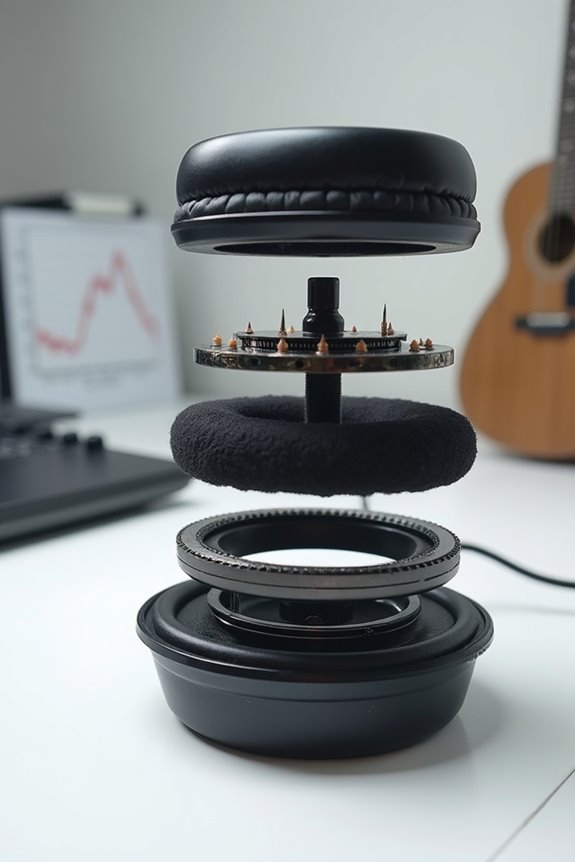
Frequency Response
Studio headphones typically cover a range of 20 Hz to 20 kHz, ensuring that every note is heard. Accurate models maintain a flat frequency response.
Impedance Considerations
Most studio headphones have an impedance of 60 ohms or higher, enhancing sound quality and compatibility.
Sensitivity Levels
Sensitivity varies from 96 to 110 dB SPL, helping you achieve louder volumes without distortion—perfect for those loud studio sessions!
Driver Technology
Dynamic drivers with magnets are popular for their efficiency and sound quality, while larger drivers deliver better bass response.
Battery Life & Wireless Connectivity****
Wireless options get 30 to 45+ hours of battery life, perfect for long recording sessions! Additionally, some models feature long battery life of up to 120 hours, catering to extensive use without interruptions. Let’s dive deeper into your perfect headphones!
Recommended Products

Closed-back, over-ear recording headphones with approx. –10 dBSPL isolation to cut ambient noise and bleed by about half. Ideal for vocals, instruments, field recordings, podcasts and AV productions.

Superior Sound Quality for Professionals: Engineered for audiophiles and DJs, our headphones deliver crystal-clear highs, rich mids, and deep, punchy lows. Whether you're mixing, mastering, or enjoying music on-the-go, experience studio-grade sound that enhances every track with precision and clarity.

Advanced build quality and engineering; Designed for studio tracking and mixing
Construction and Design Differences From Consumer Headphones
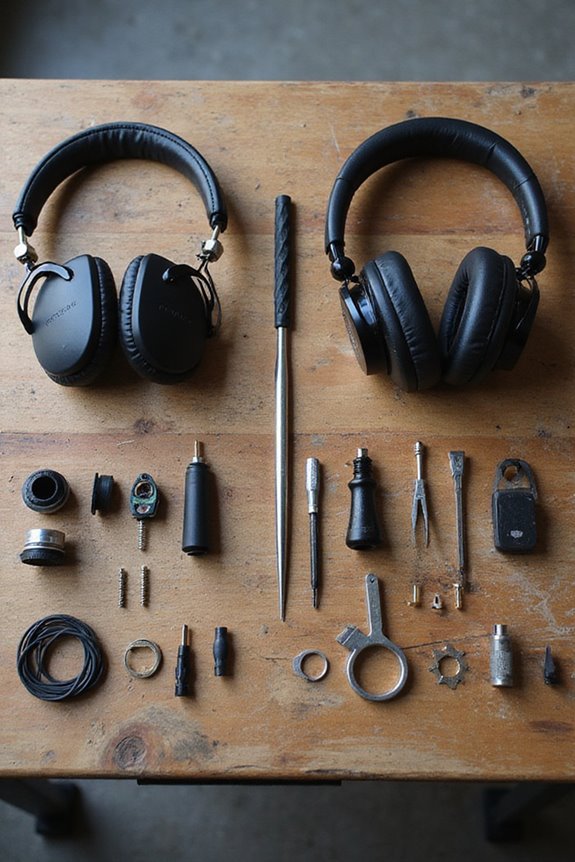
While exploring the construction and design differences between studio and consumer headphones, it’s clear that each type serves distinct purposes! 🎧 Studio headphones are crafted for durability, often using premium materials that can withstand long hours of use in professional environments. The reinforced cables and rugged housings are built to endure heavy handling, while consumer headphones lean toward lightweight materials for casual use. Additionally, the acoustic design of studio headphones features larger ear cups for sound isolation, unlike the on-ear design typical of consumer models. They prioritize accuracy over fun, ensuring a flat frequency response, making them a go-to for critical listening! These thoughtful construction materials contribute to longevity and performance, keeping our passion for sound alive! Furthermore, studio headphones typically feature large neodymium drivers that enhance sound clarity and isolation, which is essential for professional audio work.
Recommended Products
【Desktop-Grade Vision, Laptop Portability】Experience the immersive power of a massive 17.3” Full HD (1920x1080) display. Perfect for data analysts and project managers who need to view massive spreadsheets and multiple windows side-by-side without a secondary monitor. Despite its large screen, the ultra-slim 18.8mm profile and <2.1kg lightweight design ensure it fits comfortably in your commute bag.
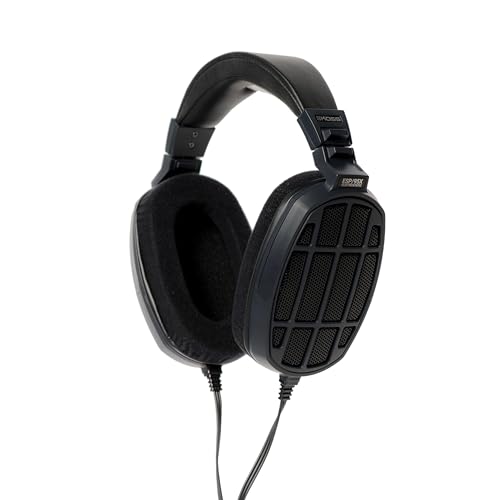
THE ELECTROSTATIC DIFFERENCE – Revolutionary electrostatic design, with advanced damping materials and a proprietary diaphragm coating for ultra-flat, full-range frequency.

40 mm neodymium drivers deliver superior acoustic performance for an expansive soundstage with clear, extended highs and warm bass
Functional Uses in Studios
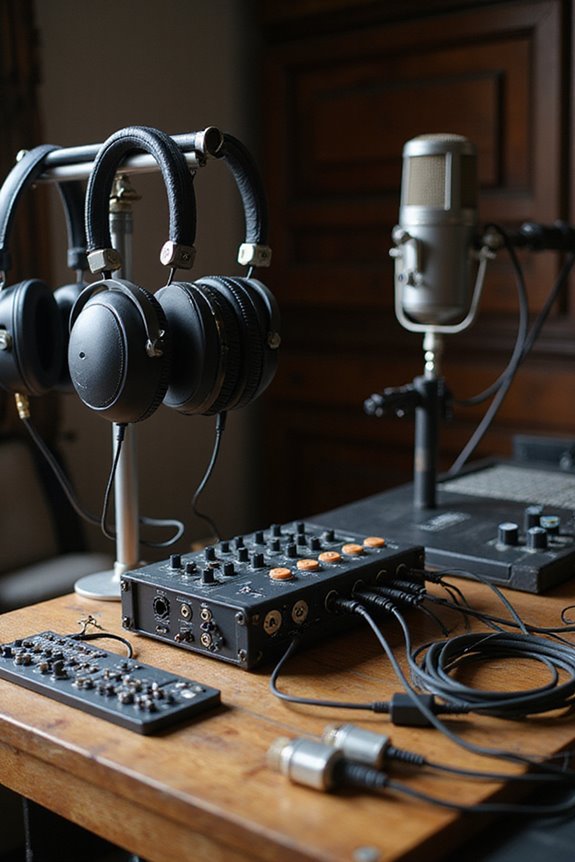
In the world of sound production, studio headphones play a key role across various tasks we’re involved in. When we’re using tracking techniques, closed-back designs help prevent sound leakage, ensuring we capture clean recordings without microphone bleed. This design lets performers hear their performance accurately, free from external interference.
During the mixing phase, we often prefer semi-open headphones. They offer a spacious soundstage and allow us to fine-tune our mixing strategies by clearly identifying flaws. With their flat frequency response, these headphones provide a true representation of our mixes, helping them translate well to any playback system. Additionally, using headphones with high-quality preamps can significantly enhance the clarity of audio during both tracking and mixing. So, whether we’re tracking or mixing, the right studio headphones are essential for turning our musical visions into reality!
Recommended Products

Incredible bass response due to the 100mm planar drivers and closed back design. Our Planar Magnetic drivers have superior impulse response, and make the headphones sound much more realistic.

Hear the difference with massive 70 mm HD drivers, enjoy full range sound up to 120Khz frequency response, hear music at its best with Hi-Res Audio compatibility

V-Planar Driver Processing (V-Planar Driver Processing): Improves bass response and reduces distortion, Travel Friendly: Specially foldable gimbal construction stores compactly for out-of-studio use
Comfort and Ergonomics
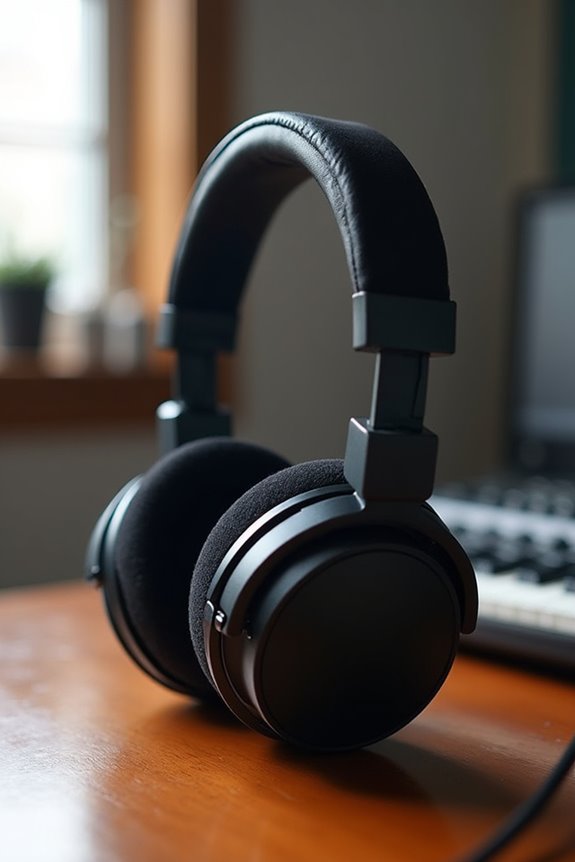
When you’re diving into long studio sessions, the comfort and ergonomics of your studio headphones can make all the difference! 🎧 Having the right ear padding is essential for guaranteeing your ears stay comfortable, especially during extended mixing or tracking.
Consider velour ear pads for a warm sound and comfy fit, or Alcantara® memory foam to reduce pressure points. Plus, adjustable headbands cater to different head sizes, preventing slippage during intense focus.
Lightweight designs help reduce strain, while circumaural cups guarantee a snug yet gentle seal around your ears. Finally, breathable materials prevent overheating, keeping your ears happy! Remember, a comfortable fit not only enhances your experience but also helps you perform your best in the studio! Let’s keep our creative flow going! 🎶 Additionally, selecting headphones with large drivers can significantly improve sound quality, ensuring a more immersive listening experience.
Critical Importance in Audio Production
With exceptional sound isolation, we can focus entirely on our mixes, free from distracting background noise. This level of precision helps us make those critical decisions in mixing and editing. Plus, they guarantee our work translates well across different devices—no more guessing if something sounds good only on one setup! Additionally, flat frequency response ensures accurate sound representation, making studio headphones essential for professional audio production.
Types of Studio Headphones
Choosing the right type of studio headphones can feel like wandering through a maze of options! Let’s break it down.
Recommended Products

Bundle Includes: Nord Electro 6D 73 Key Semi-Weighted Action Keyboard, TX-100 Closed-Back Studio Monitor Headphones, Adjustable X-Style Keyboard Bench, Adjustable Double X Keyboard Stand, and KSP100 Keyboard Piano Style Sustain Pedal (Black)

Focal Stellia headphones deliver every tiny detail of every song at both very high and very low frequencies without compromising any tonal balance

RPA2023 RPA2023 bobbin-wound voice coil RPA2023 features a hard, shock-absorbing Ebony (striped ebony) wood housing,
Closed-Back Headphones
These beauties, like the Beyerdynamic DT 770 Pro, excel at isolating sound, making them ideal for recording sessions. Their fuller bass response is perfect for mixing, but they can leak sound—big closed back drawbacks!
Open-Back Headphones
With models like the Sennheiser HD 490 PRO, these offer open back benefits that create a natural, spacious soundstage, ideal for mixing and mastering. Just keep in mind, they leak sound, so they’re not great for noisy environments.
Semi-Open and Budget Options
Semi-open models like AKG K240 provide a balance. Budget headphones, like Philips SHP9500, offer affordability without sacrificing sound quality. There’s something for everyone! 🎧
Tips for Choosing the Right Studio Headphones
How can we find the perfect pair of studio headphones that truly meets our needs? First, identify our studio use—whether we’re tracking, mixing, or mastering. If you’re focused on tracking, go for closed-back models to prevent sound leakage. For mixing and mastering, open-back headphones can provide that airy sound we love!
Next, explore headphone brands to find ones offering good sound profiles with reliable frequency response, ideally 15 Hz to 28 kHz. Comfort matters too! Lightweight designs and memory foam ear pads let us jam for hours without fatigue. Finally, keep an eye on build quality—detachable cables and durable materials guarantee our headphones last through many jam sessions. Let’s make sound magic together! 🎶
Recommended Products

Optimized closed-back design with 53mm transducers for greatest-in-class headroom and dynamic range

Wired, over-ear headphones: oxygen-free copper cables for pure sound and reduced noise plus dual audio jacks for shared listening.
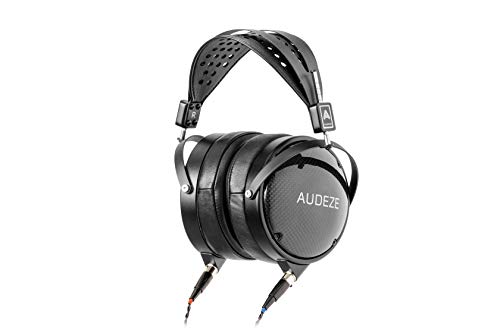
NOTE: This is the latest version of this model, the LCD-XC effective March, 2021, and replaces he previous model, ASIN: B08J2SCXBM
Frequently Asked Questions
Can Studio Headphones Be Used for Casual Listening?
We can definitely use studio headphones for casual listening. Their sound quality offers a true audio experience, but we might find them less engaging than consumer headphones. They’re great for precise listening at home, though!
How Do I Clean Studio Headphones Effectively?
Did you know that regular maintenance can extend audio equipment life by 50%? We’re sharing effective cleaning techniques and maintenance tips to keep our studio headphones pristine, ensuring the best sound quality and comfort every time we use them.
Do Studio Headphones Require Amplification?
When considering amplification, we should remember that impedance levels greatly affect sound quality. High-impedance headphones often need dedicated amplifiers, while low-impedance models typically deliver sufficient volume without one. Let’s make sure our set-ups match our headphone needs!
What Is the Lifespan of Studio Headphones?
Like fine wine, studio headphones’ lifespan hinges on durability factors and care. By embracing maintenance tips—regular cleaning and careful storage—we can guarantee our beloved gear lasts, creating timeless soundscapes in our shared musical journey.
Are Wireless Studio Headphones Available?
Yes, wireless studio headphones are available now thanks to Bluetooth technology. While they maintain impressive sound quality, we should explore different brands to find options that truly meet our professional audio needs without compromising fidelity.