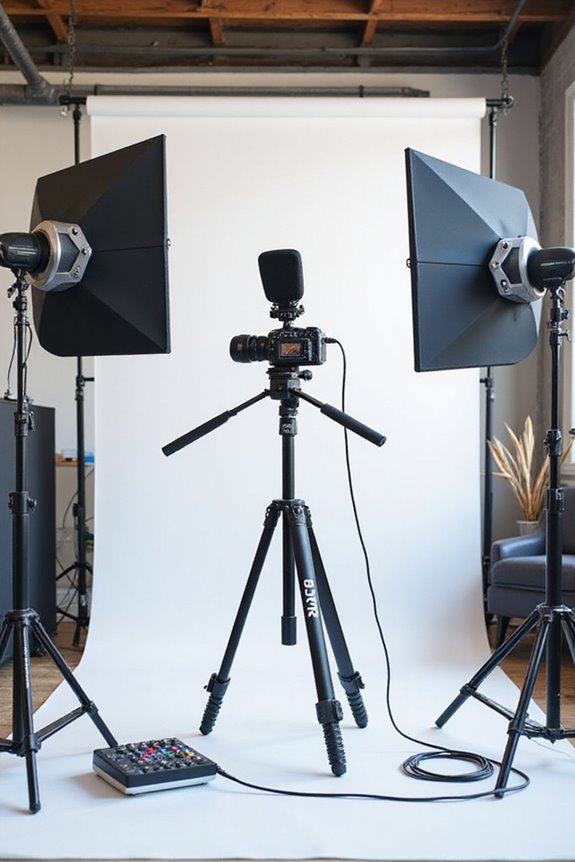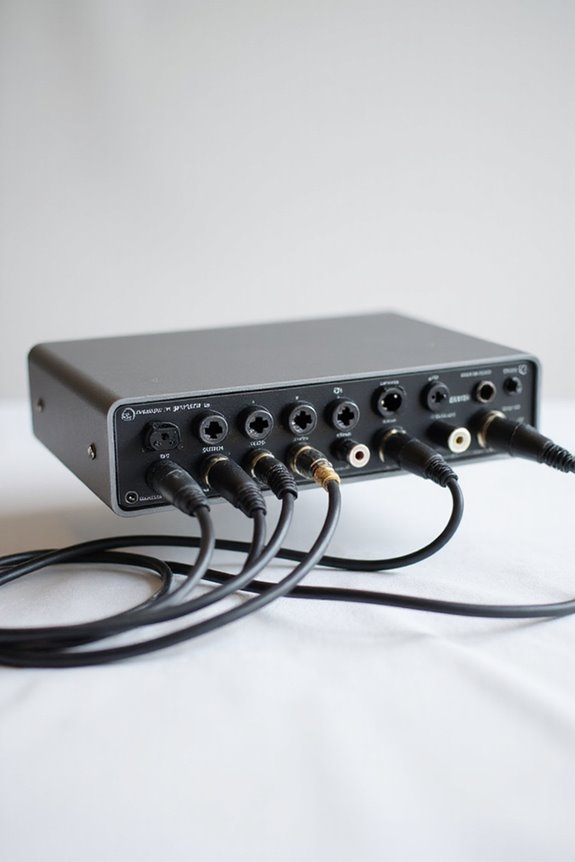
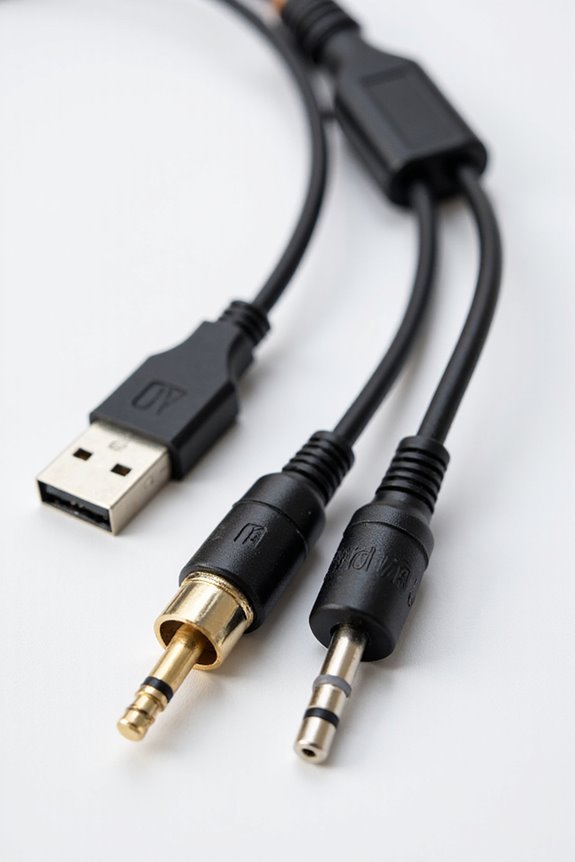

When setting up a recording studio, we’ve got to have the right cables! XLR cables are a must for microphones, ensuring clear, balanced sound. TRS and TS cables come in handy for instruments like guitars, reducing noise interference. Don’t forget RCA cables for home studio connections and MIDI cables for your digital instruments! Quality really matters in cables, so let’s make sure we pick wisely for the best sound! Stick around, and we’ll cover more essential tips! 🎶
Key Takeaways
- XLR cables are essential for balanced audio connections, ensuring maximum signal integrity and minimizing interference.
- TRS cables are crucial for reducing noise in longer runs and support stereo capabilities for advanced setups.
- TS cables are used for unbalanced mono signals, making them ideal for instruments like electric guitars.
- RCA cables connect various audio devices and are best for short distances in low-interference environments.
- MIDI cables are important for linking digital instruments and controllers, facilitating seamless integration with computers.
XLR Cables for Microphones and Audio Equipment
You may be interested


When it comes to setting up your recording environment, XLR cables are absolutely essential! 🎤 They form the backbone of a balanced signal chain, ensuring maximum signal integrity for your microphones. Built with high-quality XLR cable construction, these cables use oxygen-free copper conductors to improve signal transmission.
The triple-layered shielding, featuring aluminum foil and braided metal, effectively minimizes interference, so you won’t have to worry about unwanted noise!
With durable connectors that resist corrosion, our XLR cables aren’t just tough—they also maintain a clean connection throughout your sessions. Plus, the twisted-pair design inside protects against magnetic interference! So, if you want to achieve professional-grade sound capture, investing in quality XLR cables is a no-brainer! Additionally, using high-quality mic input ensures that your recordings maintain pristine audio fidelity, allowing for a more polished final product. Let’s keep those recordings crystal clear!
Recommended Products

Full frame sensor - 47.3-Megapixel full-frame MOS sensor that provides a wide dynamic Range and excellent performance at high sensitivity (is 25600 Max sensitivity)

For Recording Studios and Touring

Fully integrated audio production studio for podcasters, streamers, musicians and content creators
TRS and TS Cables for Instruments
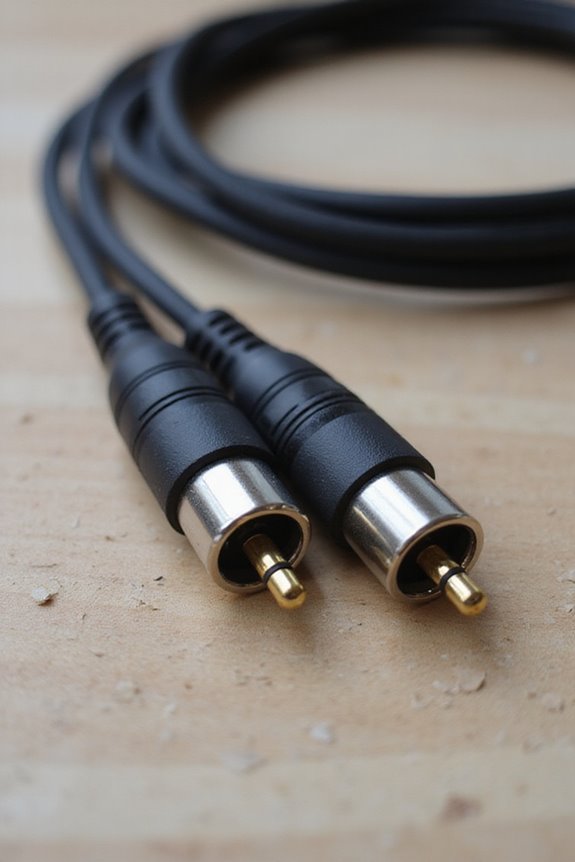
In a world where every note counts, understanding the difference between TRS and TS cables can make a huge impact on your recordings! 🎶 TS (Tip-Sleeve) cables are your go-to for unbalanced mono signals, ideal for instruments like electric guitars and basses. These cables are perfect for short runs and simpler setups, but we must watch out for noise!
On the flip side, TRS (Tip-Ring-Sleeve) cables pack a punch with their balanced designs. They shine in longer cable runs, reducing noise interference! With TRS cable advantages that include stereo capabilities and higher fidelity, they’re excellent for advanced setups. Additionally, using gain control can significantly enhance the quality of your recordings, ensuring each note is captured perfectly. So, let’s choose wisely—your recordings deserve the best! Happy recording, friends!
Recommended Products

Mix and record through AAX DSP plugins with rock-solid sub-1 ms latency monitoring
SKIP-FREE DVS PLAYBACK: The Pioneer DJ turntable uses a special DVS control system without a tone arm, along with the Magvel Clamp, ensuring smooth, skip-free performance during digital vinyl mode, even when scratching heavily

INCLUDED - RODECaster Pro II, power adapter, USB-C cable, user manual, warranty, 2x TAP300 mics, 2x HA arms, 2x headphones, XLR TRS cables for a complete studio setup.
RCA Cables for Home Studio Connections
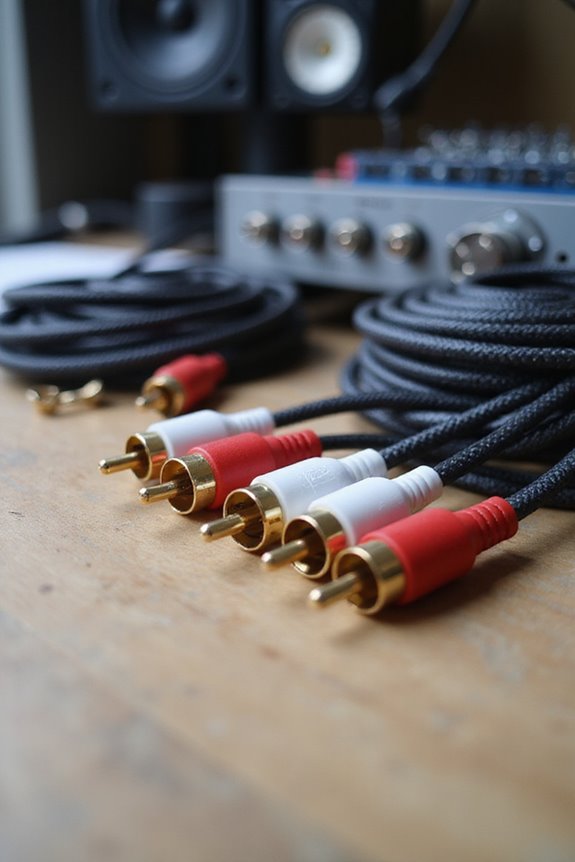
RCA cables are like the unsung heroes of home studio connections! 🎉 They’re essential for linking your audio devices, offering a reliable way to transmit unbalanced analog signals. With their characteristic red and white connectors, they serve various RCA cable applications, like connecting CD players to amplifiers or linking turntables to phono preamps.
Quality matters, though—RCA cable shielding guarantees we’re protected from EMI and RF interference. High-quality cables boast multiple layers of shielding, crafted from 99.99% oxygen-free copper, guaranteeing signal purity. Keep in mind, while RCA is great for short distances in low-interference setups, they’re less secure for longer runs. So, let’s embrace these handy cables and keep our home studios sounding incredible! 🎶
Recommended Products

Studio Sound: Accurate enough to work as a studio monitor and refined enough for HiFi use | Jack of All Trades: Great sound in a compact package for gamers, creators, musicians, and audiophiles

Studio Sound: Accurate enough to work as a studio monitor and refined enough for HiFi use | Jack of All Trades: Great sound in a compact package for gamers, creators, musicians, and audiophiles

CARRIES VIDEO SIGNALS: The Canare L-5.5CUHD cables are designed to be used for professional broadcast applications and audio/visual equipment. This cord is designed to carry various video signals including analog. This serial digital coaxial cable acts as a signal booster and can route and distribute cable tv signals. TRANSFERS 12G up to 325 ft, 6G up to 425ft and 3G up to 525ft.
MIDI Cables for Digital Instruments
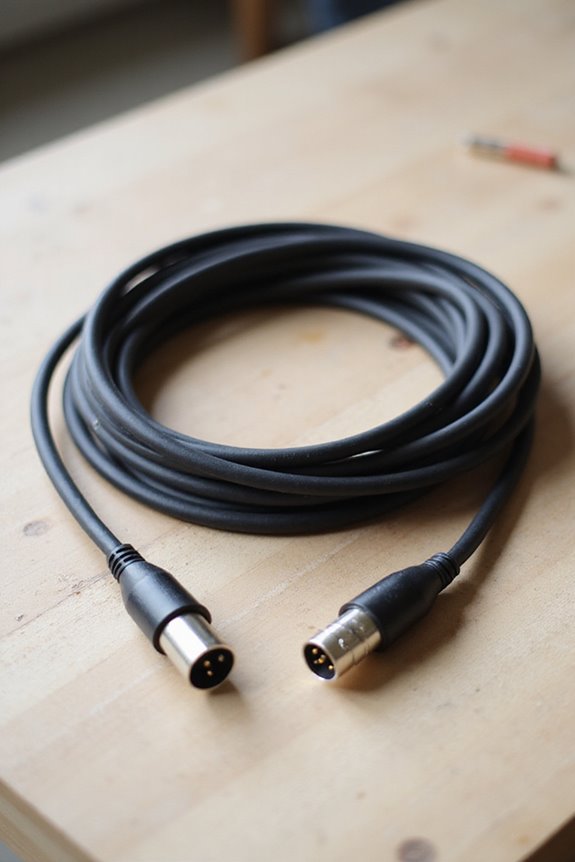
MIDI cables might just be the backstage pass your digital instruments need for a stellar performance! 🎹 With various types available, they allow you to connect keyboards, controllers, and more seamlessly.
MIDI Cable Types:
- 5-Pin DIN Cables: Traditional type for instruments, widely compatible.
- USB MIDI Cables: Directly link instruments to computers for easy MIDI integration.
- TRS MIDI Cables: Compact and great for pedalboards, but watch out for Type A and B compatibility!
- Dual MIDI Cables: Reduce clutter by combining connections into one.
Together, we can select the right cables based on our studio layout and needs. By understanding these MIDI cable types, we guarantee our equipment performs beautifully, allowing us to focus on making amazing music! 🎶
Recommended Products

EVERY TOUCH AND DYNAMIC REGISTERS WITH NATURAL PRECISION: Triple sensor keybed and grand weighted action detect every nuance for natural, expressive response across all 88 keys

Record, edit, and sequence using a familiar touchscreen interface.

Key Features: 37-note slim keys, velocity and aftertouch sensitive, Four-track step sequencer, Melodic sequencer, Drum sequencer, Performance-oriented sequencer, Arpeggiator, Controller mode
Speaker Cables for Monitors and Amplifiers
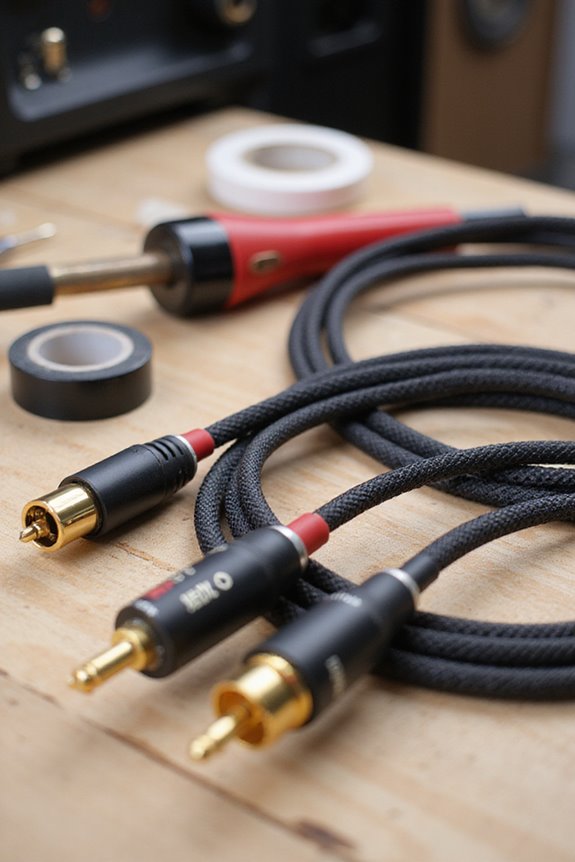
When it comes to making the most of our monitors and amplifiers, choosing the right speaker cables can be the secret sauce for our sound! 🎧 Speaker cables aren’t just a connection; they play a crucial role in ensuring every note and beat comes through clear and powerful.
Using the right gauge of speaker wire is key. For typical 8-ohm speakers under 50 feet, 16 AWG is perfect. But if we’re running longer distances or using lower impedance speakers (4 ohms or less), let’s go thicker with 14 or even 12 AWG. Don’t forget those connectors! Banana plugs or spade connectors protect our setup, ensuring the best impedance matching and sound quality. So, let’s wire up and let the music play! 🎶
Recommended Products

Bundle Includes: Sony STR-AN1000 7.2 Channel 8K AV Receiver with Dolby Atmos, and DTS:X (Black), Select Speaker Wire 14AWG with High-Strand CCA and Clear Polarity Marking (50 Feet), and High-Quality Gold Plated Speaker Banana Plugs (Open Screw Type, 5 Pairs)


ULTIMATE HOME AND VENUE AUDIO KIT: Experience unparalleled sound quality and versatility with our comprehensive audio kit, perfect for residential and commercial settings. This kit includes top-tier components like a powerful hybrid amplifier, high-end speaker wire, and innovative VRIC650 speaker system, ensuring immersive audio experiences for any occasion.
Cable Management Techniques
Cable Organization
Let’s group cables by function or destination to make troubleshooting techniques much easier. Use cable sleeves and Velcro straps for neat organization, while keeping power cables separate from audio cables to reduce noise. Additionally, ensure that your cables are capable of handling the balanced outputs required for optimal sound quality.
Labeling
Don’t forget to label both ends of our cables! Color-coded sleeves help visually differentiate types of cables, saving us time and confusion.
Proper Wrapping
When coiling, use the “over-under” method to prevent damage. Regular inspections keep our cables in top shape for the best possible sound!
Length Considerations for Studio Setups
Getting those cables organized is just the start of creating our ideal recording setup. Let’s talk about studio cable lengths since they’re essential for maintaining signal integrity. Shorter cables are usually better—think 8 feet for speaker cables or about 1 meter for interconnects between closely placed gear. We want to keep those runs tight, but if long cables are a must, balanced cables work wonders for noise cancellation. When it comes to XLRs, picking the right length is key; shorter cables reduce clutter and potential interference. So, measure before you buy! And remember, a touch of slack can save us from stressing out our connections during those creative sessions. 🎶 Let’s keep it clear and quality-focused! Additionally, using high-quality audio interfaces can significantly improve the overall sound capture in your recordings.
The Importance of Cable Quality
Cable quality isn’t just an afterthought—it’s a critical element that can make or break your recording experience! When we invest in high-purity conductors like oxygen-free copper, we boost audio fidelity by improving conductivity. Plus, with advanced shielding techniques, we reduce pesky interference, ensuring our music sounds as pure as possible.
Durability matters too! Cables with robust insulation and reinforced connectors offer cable longevity, surviving the wear and tear of live settings. And let’s not forget about balanced cables—these can help cancel noise along the way. Choosing quality cables means we’re not just avoiding distortion; we’re enhancing our sound! So, let’s keep our setups professional and our audio pristine; better cables lead to better recordings! 🎶 Additionally, utilizing cables that support high-quality converters can significantly impact audio clarity and fidelity.
Connecting Consumer and Professional Equipment
Connecting consumer and professional audio equipment opens up a world of creative possibilities! 🎶 To bridge the gap, we’ll need to take into account cable compatibility and signal conversion. RCA to 1/4″ TS cables work wonders for connecting your media players to professional gear, while 3.5mm TRS to dual RCA cables get your portable devices hooked up to hi-fi systems.
For those serious about quality, XLR cables are a must for pro microphones, minimizing noise like a pro! When adapting signals, specialty breakout cables can help convert stereo outputs for mono inputs. Embrace the blend of consumer convenience and professional standards, and let your creativity soar! 🌟 Choose your cables wisely; sound quality really does matter! Additionally, investing in high-quality shielding can significantly enhance the clarity of your audio signals.
Frequently Asked Questions
How Do I Choose the Right Cable Length for My Setup?
When choosing cable lengths, we’ve learned that good cable management is key. Let’s guarantee our setups maintain signal integrity while avoiding clutter. A little extra length is always helpful, enabling flexibility and future adjustments without hassle.
Can I Use a TRS Cable for a TS Connection?
We recognize the temptation to use a TRS cable for a TS connection, but be cautious! Doing so might lead to signal interference and compatibility issues. Let’s stick to TS for unbalanced setups to avoid problems.
What Is the Difference Between Balanced and Unbalanced Cables?
When we explore balanced versus unbalanced cables, we reveal a symphony of sound. Balanced cables offer benefits of noise rejection, while unbalanced cables can experience drawbacks, especially over longer distances. Together, we can access audio’s true potential!
Do I Need an Adapter for Different Cable Types?
When it comes to cable compatibility, we often find ourselves needing adapter types for seamless connections. Whether it’s XLR to TRS or RCA to TS, it helps guarantee everything works together smoothly in our setups.
How Can I Prevent Cable Wear and Tear?
To prevent cable wear and tear, we should prioritize cable management, use protective sleeves, and regularly inspect our cables. With proactive care, we can guarantee longevity, minimize damage, and foster a reliable setup together.