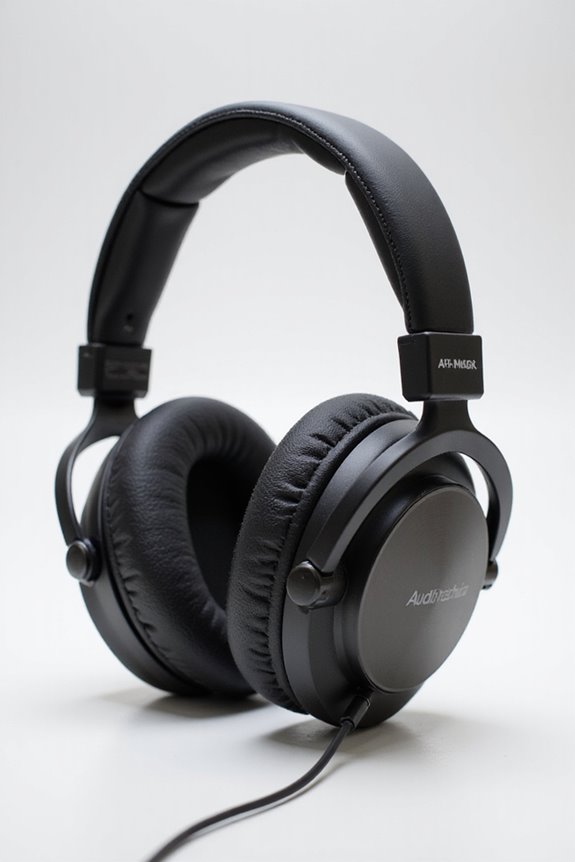
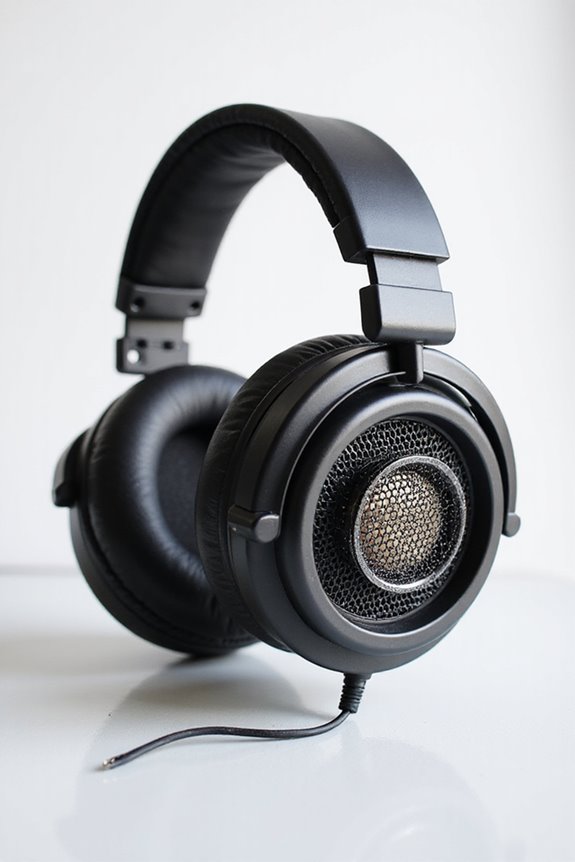

Headphone sensitivity rating measures how well headphones convert power into sound, telling us how loud they can get! It’s usually expressed in decibels (dB SPL/mW) and is measured with a 1 kHz signal. Higher sensitivity ratings mean louder audio with less power, which is perfect for mobile use. Just remember, high sensitivity doesn’t always equal great sound quality. 🎧 If you stick around, we’ll explore more about how sensitivity and impedance interact!
Key Takeaways
- Headphone sensitivity rating indicates how effectively headphones convert power into sound, measured in decibels (dB SPL/mW).
- Higher sensitivity ratings mean louder audio with less power, benefiting mobile and outdoor usage.
- Sensitivity ratings are typically tested around 1 kHz frequency, aligning with standard measurement practices.
- Impedance affects sensitivity: low-impedance headphones (<32Ω) are easier to drive, while high-impedance headphones (>100Ω) require more voltage.
- Sensitivity ratings can be misleading; high sensitivity does not ensure better sound quality and may amplify unwanted noise.
Definition and Measurement of Sensitivity
You may be interested


When we immerse ourselves in the world of headphone sensitivity, it’s important to understand exactly what it means and how we measure it! Sensitivity tells us how effectively headphones convert power into sound, typically measured in decibels (dB SPL/mW).
To get there, we use specific measurement techniques, starting with an audio signal generator producing a 1 kHz sine wave. A calibrated microphone captures the sound output, ensuring we meet testing standards like ANSI/ASA S3.7-2016. Consistency is key, so headphones are mounted on a testing fixture or HATS for accurate positioning.
Analyzing the sound pressure levels gives us insights into loudness. With careful calibration, we can be sure the ratings genuinely reflect how headphones perform in realistic conditions. 🚀
Recommended Products

【Multi-Function Network Tester】The NOYAFA NF-8209S Ethernet cable tester features CONT, power and length tests, line scan, POE, FLASH, QC and NCV port tracing, anti-interference scan, loopback test, and LED illumination. This RJ45/RJ11 line tracer is compatible with CAT5/CAT5e, CAT6/CAT6A, and PSE standards (AT/AF standards). It can identify power modes and verify RJ45 cables, making it a convenient tool for tracing, inspecting, and testing underground telephone lines. Powered by a standard 9V battery (included), it's ready for use right out of the box. It's a must-have tool for network installers, IT professionals, telecom engineers, and DIY enthusiasts.

【SPECIAL DETECTOR TOOL】This automotive stethoscope kit is specially designed and developed for checking abnormal noise of car engine, abnormal noise of body, and abnormal noise of chassis, etc. The host computer with integrated six-channel signal receiver is used with six different sensors to detect abnormal noise during the driving of the car, synchronized with sound and light, which can easily identify the early problems of the car and facilitate car repair as soon as possible.

【Cable Tracing & Port Finder】FNIRSI LPM-10A wire tracer electrical & ethernet cable tracer quickly locates Ethernet cables & identifies active ports. Adjustable sensitivity makes this cable toner & wire toner perform reliably in noisy, bundled cable environments.
Understanding Sensitivity Units
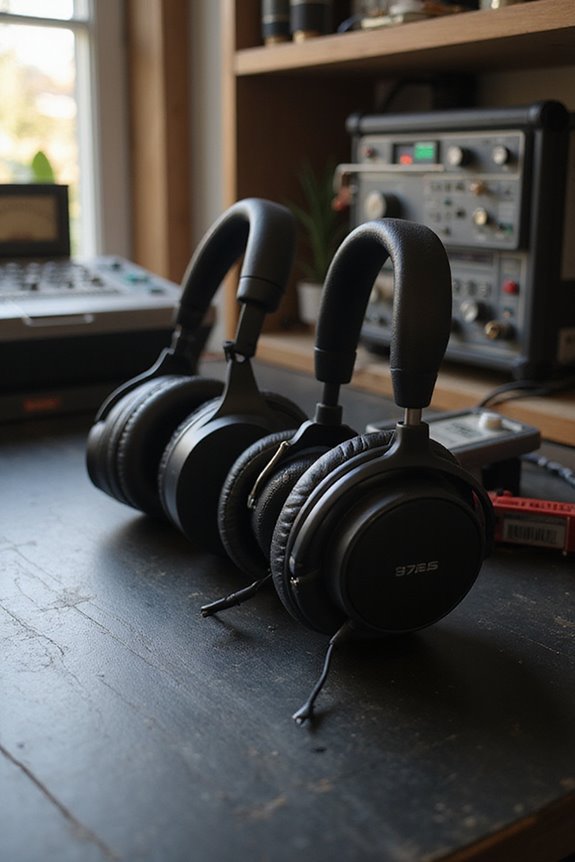
Understanding headphone sensitivity units is essential for anyone diving into the audio domain! 🎧 There are two primary units we see: decibels Sound Pressure Level per milliwatt (dB SPL/mW) and decibels SPL per volt (dB SPL/V). The first helps in sensitivity comparisons across headphones with different impedances, while the second shines when the impedances are similar. It’s important to note that dB SPL/V values often appear higher in ads, making them seem more appealing! Remember, higher sensitivity ratings mean louder sound from the same power input. Sensitivity standards vary across frequencies, usually tested around 1 kHz. By grasping these units, we can better match our headphones with our amplifiers. Let’s explore this world together! 🎶
Practical Implications of Sensitivity Ratings
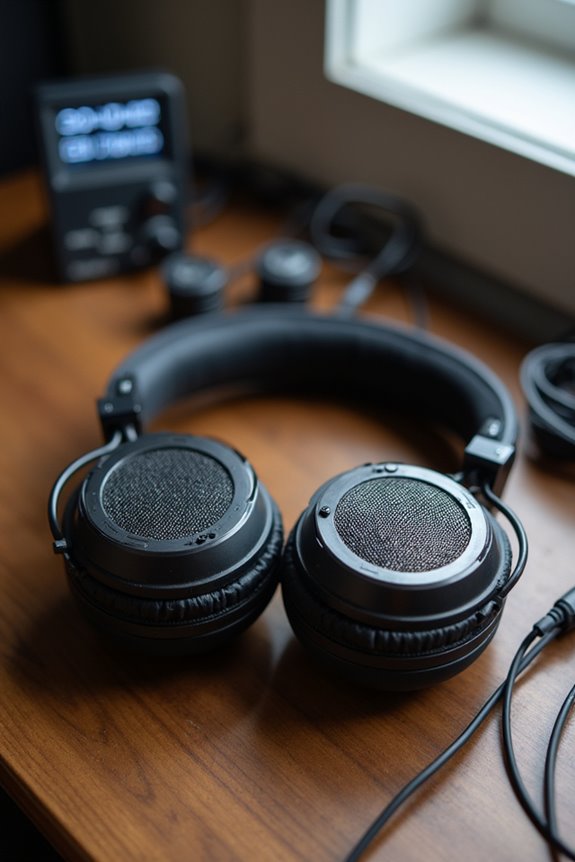
In the world of headphones, sensitivity ratings make a real difference in how we experience sound! 🎶 Typically measured in dB SPL/mW, higher sensitivity means you can enjoy louder audio without cranking up the power. So, when choosing headphones, think about practical usage. High-sensitivity models are perfect for mobile use and outdoor adventures. They let you connect easily to smartphones, saving battery life and delivering good volume.
For studio use, maybe consider balanced sensitivity. This combination caters to our audiophile needs without distortion. Understanding sensitivity ratings helps us make smart consumer choices, ensuring we avoid mismatched pairs. Additionally, headphones with large drivers enhance bass and audio quality, contributing to an unforgettable listening experience. So, let’s pick wisely, enjoy our tunes, and keep our ears happy!
Recommended Products
No Standalone lithium batteries are sold with the product

Korg’s Best Keyboard Actions- NAUTILUS AT 61 comes with a semi-weighted synth action with Aftertouch, and the NAUTILUS AT 88-key version offers a premium four-stage weighted hammer action with Aftertouch, for an ultra-realistic piano playing experience.

Optimized closed-back design with 53mm transducers for greatest-in-class headroom and dynamic range
Sensitivity and Impedance Relationship
Deciphering headphone specs can feel like learning a new language, and one of the most fascinating relationships we encounter is between sensitivity and impedance. 📊 Impedance, measured in ohms (Ω), tells us how much electrical resistance the headphones present. Sensitivity impact is significant; it measures how efficiently heat headphones convert electrical power into sound. Low-impedance headphones (<32Ω) are easier to drive but can drain your devices quicker. Conversely, high-impedance ones (>100Ω) require more voltage and often need dedicated amplifiers. This impedance influence can change your listening experience entirely. Together, these specs determine how loud your headphones can get with a given source. So, understanding this relationship helps us choose the perfect gear for our audio adventures! 🎧 Additionally, high-sensitivity ratings are essential for crisp sound quality at lower volumes, making them particularly important for mixing and mastering.
Recommended Products
MUZISHARE X7 Upgraded version. Upgraded the internal coupling capacitor, is the designer to debug the custom-made silver film capacitor, relative to the classic version of the extension, control, density is better.

THE PROFESSIONAL: Many of the current hit recordings you’ve heard have been mixed on Audeze headphones - the headphone of choice for recording engineers, musicians and audiophiles alike. With an efficiency of 103dB/1Mw and an impedance of 20 ohms they are the perfect option for anyone seeking a reference quality headphone.

HIFIMAN's UNVElLED, which made its debut in 2024 in the reference model SUSVARA UNVElLED, literally means just that: removing the grill that sometimes interferes with the movement of the company's nanometer thickness diaphragm. By doing so, the soundstage widens, with greater depth to deliver an exceptionally pure audio experience. Harmful Reflections and Refractions of Sound Waves React on the Diaphragm. Sound waves emitted, The sound waves are reflected and refracted by the grill back to the diaphragm, The diaphragmis affected and the sound quality is diminished.
Limitations of Sensitivity Ratings
While diving into headphone specs, you might find yourself stumbling upon sensitivity ratings that can be misleading. 😅 These ratings, intended to indicate how efficiently headphones convert power into sound, often leave us scratching our heads. Inconsistent measurements across brands make direct comparisons tough. One model might boast high sensitivity, but that doesn’t guarantee great sound quality. It’s essential to note that higher sensitivity can lead to noise amplification, picking up unwanted hiss in certain setups. Plus, terms like sensitivity and efficiency can get tossed around confusingly! So, while sensitivity offers some perspective, it’s not the final word on quality or loudness. Always consider your source device and how all elements come together for the best listening experience! Additionally, headphones with dynamic bass can enhance the overall audio quality, providing a more enjoyable listening experience.
Frequently Asked Questions
How Does Sensitivity Affect Headphone Sound Quality?
We all know sensitivity influences sound perception, right? Higher sensitivity headphones can enhance volume levels, making sounds feel more present, but they don’t always guarantee better quality. Let’s dive deeper into this together!
What Is the Ideal Sensitivity Range for Headphones?
When considering the ideal sensitivity for headphones, we find that it often aligns with listener preferences. Most of us enjoy headphones around 100 to 110 dB SPL/mW for a balanced, enjoyable listening experience.
Do Different Genres of Music Require Different Sensitivity Ratings?
When diving into music, we’ve all sensed how genre preferences shape our listening experience. Different sound dynamics call for tailored sensitivity; what suits rock might not resonate with classical. Finding harmony in choice connects us all.
Can Headphone Sensitivity Change Over Time?
Absolutely, we’ve noticed that headphone sensitivity can change over time. Sensitivity degradation often occurs due to aging components and wears from use, impacting our listening experience. Regular care could help maintain their performance and longevity.
Are Higher Sensitivity Headphones Always Better?
Higher sensitivity headphones aren’t always better for us. While they deliver louder sound, we might experience unwanted sound distortion at high volumes, so balancing sensitivity with sound quality is essential for our listening enjoyment.